Special Issue Editors
Dr. Luc S. Cousineau, Dalhousie University | Canadian Institute for Far-Right Studies Luc.Cousineau@dal.ca
Dr. Paulo Ravecca, Saint Mary’s University | Canadian Institute for Far-Right Studies Paulo.Ravecca@smu.ca
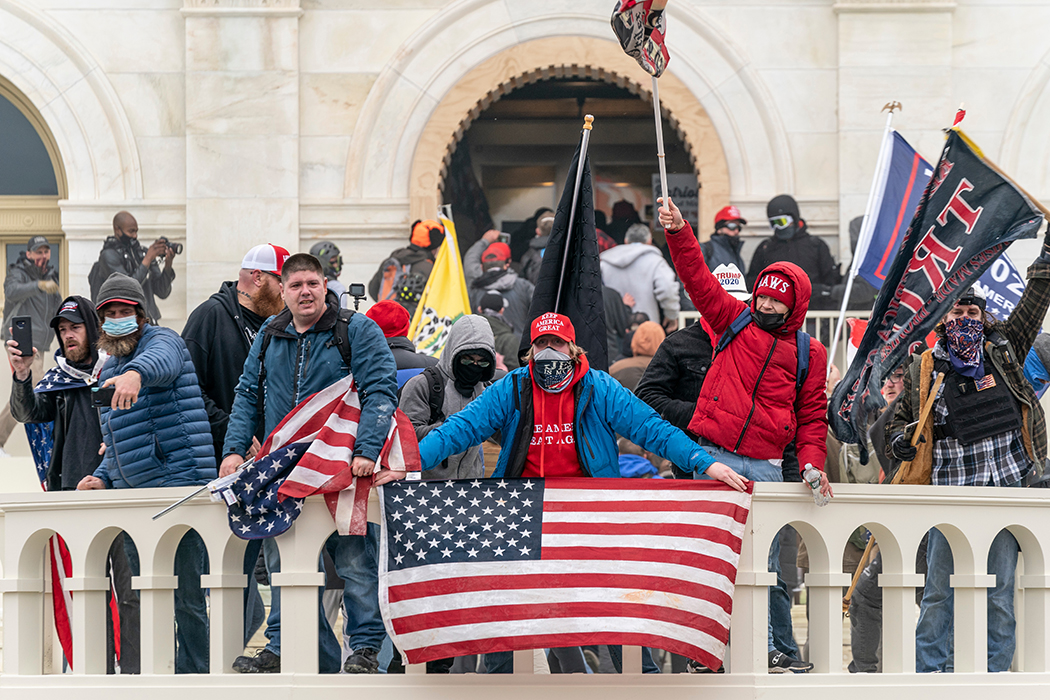
In less than a year, the current US administration has taken significant steps to consolidate and institutionalize far-right authoritarian power. Far from being an exception, however, Donald Trump is in the company of a long list of political leaders, including Orbán in Hungary, Meloni in Italy, Milei in Argentina, Modi in India, and Bukele in El Salvador. This ultraconservative wave is indeed transnational, and it goes beyond electoral gains: in what can be described as a Gramscian turn, these movements, leaders, and political parties are effectively disputing the terrain of culture and common sense (Ravecca et al, 2022; Ravecca et al, 2024). This means that a narrow conception of politics, which only focuses on formal institutions, cannot grasp the multidimensionality of this new political landscape (Ravecca, 2019). In fact, the production of cultural artifacts like videos, images, and narratives, and their circulation on social media, are having a significant impact on the quality of the public conversation and on the everyday life of large sectors of the population. In this context, it can be argued that leisure, broadly understood, is at the core of far-right discourse and practice. For this reason, global leisure studies are particularly well-placed to engage with this complex and urgent landscape.
While most research has focused on how leisure can be a positive force for change, inclusion, and belonging (e.g., Fortune et al., 2021, among many others), scholarship in the field also shows how leisure activities can be a vehicle for hate (Spracklen, 2013; Woolley & Luger, 2023), prejudice (Mowatt, 2018), surveillance (Rose et al., 2023), and violence (Mowatt, 2012). In complement to feminist (Henderson, 1990; Shaw, 1985), racial justice (Bixler & Floyd, 1997; Floyd et al., 1994), and social justice (Arai & Kivel, 2009; Mair, 2011; Parry et al., 2013) research in leisure studies, researchers like Rasul Mowatt (2012, 2017, 2018), A.J. Veal (2021), DJ Willams (2009, 2017), and Karl Spracklen (2013, 2015) have long called for leisure research to illuminate groups, activities, and settings that are uncomfortable and even dangerous – including those associated with the far right.
Now more than ever, we need to heed these calls and turn the focus of critical leisure studies, along with the theoretical and explanatory power of this discipline, toward critical inquiry of the ways far-right ideologies are couched (and cloaked) in leisure practices. Far-right scholars have engaged with these important topics from a variety of perspectives and across disciplines. These include the development of collective identity (Devries, 2021; Leman-Langlois et al., 2024; Mondon, 2025; Yoshida & Demelius, 2024), the role of women (Dickel & Evolvi, 2023; Ebner & Davey, 2019; Gordon, 2018; O’Brien, 2018; Proctor, 2022), narratives of gender supremacy (Copland, 2021; Koulouris, 2018; Pearson, 2019; Winter, 2019), the geographies of far-right ideology (Luger, 2022), and masculinities (Christley, 2021; Cousineau, 2021; Linders et al., 2022; Roose et al., 2022). However, this work has been done almost exclusively outside of leisure studies, which implies a loss of knowledge. This special issue aims to open a space for leisure scholars to contribute their insight, research, and wisdom on the landscape-altering forces and movements of the far right.
Papers will examine how leisure forms an integral part of far-right narratives and practices. This encompasses a wide range of possibilities – from exploring the recruiting power of supremacist ideology woven into leisure settings and communities, to analyzing localized movements with transnational implications, such as neo-Nazi music cultures and festivals, combat sport clubs, and gaming communities. Thus, manuscripts can address, among other topics:
- How far-right leisure activities can be reactionary to perceived socio-political change (e.g., as defence mechanisms against the perceived “undoing” of the white heteronormative nuclear family),
- Far-right leisure located in established mainstream structures (e.g., la Corcade Etudiante in France),
- The early colonization of internet spaces by far-right groups (e.g., Stormfront, a major white supremacist digital space that was an early colonizer of networked digitality and remains an active space of online leisure participation and recruitment to hate groups),
- The ongoing far-right presence and influence in digital space (e.g., the “momosphere,” digital gaming, tradwives, and other internet cultures),
- The impact that far-right rhetoric, hate speech, and misinformation have on ‘expert-guided’ advice consumed in leisure-time media consumption.
This special issue is part of a larger and ambitious interdisciplinary project that aims to bring together leisure scholars with researchers from other disciplines (e.g., political science, internet and media studies, anthropology, sociology, and others) exploring the far right. Writing in dyads or teams working across disciplines (either on papers proposed as a team or connected by the editors), manuscripts will build on the small body of existing leisure research on the topic (e.g., Cousineau, 2025; Spracklen, 2013; Woolley & Luger, 2023) to take on different elements of how leisure is used in the making, maintaining, exposing, and combating the far right.
Submission Instructions
This special issue is a necessarily interdisciplinary endeavour, and we therefore seek submissions authored by interdisciplinary teams. The following is true for all submissions:
- Abstracts up to 300 words (excluding any references) submitted to the Special Issue Editors by email at Luc.Cousineau@dal.ca.
- Papers based on empirical research and theoretical papers will be accepted.
- Timeline:
- Abstract Submission Deadline – December 15, 2025
- Author Notifications – January 2026
- Initial full submissions – April 2026
- Publication – early 2027
Manuscripts should follow the T&F formatting guidelines as listed on the World Leisure Journal website.
We will accept abstract submissions in the following formats:
- Teams formed at the time of submission
These authorship teams will be formed by authors before submission, with abstracts crafted together. These abstracts should include a brief explanation of the team’s interdisciplinary makeup and how leisure studies/theory is represented in their team. - Individual submissions
Authors who submit accepted individual abstracts will be paired or teamed with other individual submissions with similar topics to form interdisciplinary authorship teams. This will allow for new partnerships as well as interesting interdisciplinary research development. Authors of individual submissions should also include a brief outline of their area of expertise with their submission.
- Teams formed at the time of submission
References
Arai, S., & Kivel, B. D. (2009). Critical Race Theory and Social Justice Perspectives on Whiteness, Difference(s) and (Anti)Racism: A Fourth Wave of Race Research in Leisure Studies. Journal of Leisure Research, 41(4), 459-472. https://doi.org/10.1080/00222216.2009.11950185
Bixler, R. D., & Floyd, M. F. (1997). Nature is Scary, Disgusting, and Uncomfortable. Environment and Behavior, 29(4), 443–467. https://doi.org/10.1177/001391659702900401
Christley, O. R. (2021). Traditional Gender Attitudes, Nativism, and Support for the Radical Right. Politics & Gender, 1–27. https://doi.org/10.1017/S1743923X21000374
Copland, S. (2021). The Online Manosphere and Misogyny in the Far-Right: The Case of the #thotaudit. In M. Devries, J. Bessant, & R. Watts (Eds.), RISE OF THE FAR RIGHT: technologies of recruitment and mobilization. (pp. 106-126). Rowman & Littlefield.
Cousineau, L. S. (2021). “A Positive Identity for Men”?: Pathways to far-right participation through Reddit’s /r/MensRights and /r/TheRedPill. In M. Devries, B. Judith, & R. Watts (Eds.), Rise of the Far Right: Technologies of Recruitment and Mobilization (pp. 127-146). Rowman & Littlefield.
Cousineau, L. S. (2025). Leisure as ideological infrastructure: Four nodes of far-right and new-right mobilization. In B. D. Lashua, K. Spracklen, & F. C. Yuen (Eds.), Research Handbook on the Sociology of Leisure. Edward Elgar Publishing Ltd.
Devries, M. (2021). Mobilized But Not (Yet) Recruited: The Case of the Collective Avatar. In M. Devries, J. Bessant, & R. Watts (Eds.), Rise of the Far Right: Technologies of Recruitment and Mobilization (pp. 237-260). Rowman & Littlefield.
Dickel, V., & Evolvi, G. (2023). “Victims of feminism”: Exploring networked misogyny and #MeToo in the manosphere. Feminist Media Studies, 23(4), 1392-1408. https://doi.org/10.1080/14680777.2022.2029925
Ebner, J., & Davey, J. (2019). How Women Advance the Internationalization of the Far-Right (Perspectives on the Future of Women, Gender, & Violent Extremism, p. 8) [Commissioned Paper]. George Washington University Program on Extremism. https://extremism.gwu.edu/sites/g/files/zaxdzs2191/f/How%20Women%20Advance%20the%20Internationalization%20of%20the%20Far-Right.pdf
Floyd, M. F., Shinew, K. J., McGuire, F. A., & Noe, F. P. (1994). Race, Class, and Leisure Activity Preferences: Marginality and Ethnicity Revisited. Journal of Leisure Research, 26(2), 158-173. https://doi.org/10.1080/00222216.1994.11969951
Fortune, D., Lord, J., Walker, E., & Froehlich, S. (2021). Enhancing belonging within community leisure settings. Loisir et Société / Society and Leisure, 44(2), 218-232. https://doi.org/10.1080/07053436.2021.1935420
Gordon, G. (2018, December 13). American Women of the Far Right. The New York Review of Books. https://www.nybooks.com/daily/2018/12/13/american-women-of-the-far-right/
Henderson, K. A. (1990). Anatomy is not destiny: A feminist analysis of the scholarship on women’s leisure. Leisure Sciences, 12(2), 229-239. https://doi.org/10.1080/01490409009513102
Koulouris, T. (2018). Online misogyny and the alternative right: Debating the undebatable. Feminist Media Studies, 18(4), 750-761. https://doi.org/10.1080/14680777.2018.1447428
Leman-Langlois, S., Tanner, S., & Campana, A. (2024). The Great Right North: Inside Far-Right Activism in Canada. McGill-Queen’s Press – MQUP.
Linders, N., Dudink, S., & Spierings, N. (2022). Masculinity and Sexuality in Populist Radical Right Leadership. Politics & Gender, 1-22. https://doi.org/10.1017/S1743923X22000265
Luger, J. (2022). Celebrations, Exaltations and Alpha Lands: Everyday geographies of the far-right. Political Geography, 96, 102604. https://doi.org/10.1016/j.polgeo.2022.102604
Mair, H. (2011). What about the “Rest of the Story”? Recreation on the Backs of “Others.” In K. Paisley & D. L. Dustin (Eds.), Speaking Up and Speaking Out: Working for Social and Environmental Justice through Parks, Recreation, and Leisure (pp. 117–123). Sagamore Publishing. https://www.reserves.uwaterloo.ca/ares/ares.dll?Action=10&Type=10&Value=186046
Mondon, A. (2025). Populism, public opinion, and the mainstreaming of the far right: The ‘immigration issue’ and the construction of a reactionary ‘people.’ Politics, 45(1), 19-36. https://doi.org/10.1177/02633957221104726
Mowatt, R. A. (2012). Lynching as Leisure: Broadening Notions of a Field. American Behavioral Scientist, 56(10), 1361–1387. https://doi.org/10.1177/0002764212454429
Mowatt, R. A. (2017). A Critical Expansion of Theories on Race and Ethnicity in Leisure Studies. In K. Spracklen, B. Lashua, E. Sharpe, & S. Swain (Eds.), The Palgrave Handbook of Leisure Theory (pp. 577–594). Palgrave Macmillan UK. https://doi.org/10.1057/978-1-137-56479-5_33
Mowatt, R. A. (2018). A People’s History of Leisure Studies: Leisure, the Tool of Racecraft. Leisure Sciences, 40(7), 663-674. https://doi.org/10.1080/01490400.2018.1534622
O’Brien, D. Z. (2018). “Righting” Conventional Wisdom: Women and Right Parties in Established Democracies. Politics & Gender, 14(01), 27-55. https://doi.org/10.1017/S1743923X17000514
Parry, D. C., Johnson, C. W., & Stewart, W. (2013). Leisure Research for Social Justice: A Response to Henderson. Leisure Sciences, 35(1), 81–87. https://doi.org/10.1080/01490400.2013.739906
Pearson, E. (2019). Extremism and toxic masculinity: The man question re-posed. International Affairs, 95(6), 1251-1270. https://doi.org/10.1093/ia/iiz177
Proctor, D. (2022). The #tradwife persona and the rise of radicalized white domesticity. Persona Studies, 8(2), 7–26. https://doi.org/10.3316/informit.873023567302359
Ravecca, P. (2019) The Politics of Political Science: Re-Writing Latin American Experiences. Routledge.
Ravecca, P., Schenck, M., Fonseca, B., & Forteza, D. (2022). What are they doing right ? Tweeting right-wing intersectionality in Latin America. Globalizations, 1-22. https://doi.org/10.1080/14747731.2021.2025292
Ravecca, P., Robaina, E., & Zannier, F. (2024). Reading the Far Right Beyond Self-Righteousness: Neoliberalism, Democratic Deficit, and Javier Milei’s Global Leadership. Lua Nova: Revista de Cultura e Política, 123, e123039pr. https://doi.org/10.1590/0102-123039pr/123
Roose, J. M., Flood, M., Greig, A., Alfano, M., & Copland, S. (2022). Masculinity and Violent Extremism. Springer International Publishing. https://doi.org/10.1007/978-3-031-10497-8
Rose, J., Lashua, B., & Pang, B. (2023). Leisure as Surveillance, and the Surveillance of Leisure. Leisure Sciences, 45(5), 391-399. https://doi.org/10.1080/01490400.2023.2200153
Shaw, S. M. (1985). Gender and leisure: Inequality in the distribution of leisure time. Journal of Leisure Research, 17(4), 266-282.
Spracklen, K. (2013). Nazi punks folk off: Leisure, nationalism, cultural identity and the consumption of metal and folk music. Leisure Studies, 32(4), 415-428. https://doi.org/10.1080/02614367.2012.674152
Spracklen, K. (2015). Digital leisure, the Internet and popular culture: Communities and identities in a digital age. Palgrave Macmillan.
Veal, A. J. (2021). Capitalism, fascism, communism, social democracy and the study of leisure: Comments prompted by Ken Roberts’ “Still speaking to ourselves.” World Leisure Journal, 63(4), 423–440. https://doi.org/10.1080/16078055.2021.2008655
Williams, D. (2009). Deviant Leisure: Rethinking “The Good, the Bad, and the Ugly.” Leisure Sciences, 31(2), 207-213. https://doi.org/10.1080/01490400802686110
Williams, D. (2017). Entering the Minds of Serial Murderers: The Application of Forensic Leisure Science to Homicide Research. Leisure Sciences, 39(4), 376-383. https://doi.org/10.1080/01490400.2016.1234953
Winter, A. (2019). Online hate: From the far-right to the alt-right and from the margins to the mainstream. In K. Lumsden & E. Harmer (Eds.), Online Othering: Exploring Digital Violence and Discrimination on the Web (pp. 39-63). Springer International Publishing. https://doi.org/10.1007/978-3-030-12633-9
Woolley, D., & Luger, J. (2023). The Deviant Leisure of Gym Bodies, Militarized Branding and Fascistic Creeps. In I. R. Lamond & R. Garland (Eds.), Deviant Leisure and Events of Deviance: A Transgressive Compendium (pp. 143–172). Springer International Publishing. https://doi.org/10.1007/978-3-031-17793-4_9
Yoshida, Y., & Demelius, Y. (2024). Seduction of far-right actions: A pathway to an authentic self? Crime, Media, Culture, 17416590241245380. https://doi.org/10.1177/17416590241245380