Latest publications

A Critical Analysis of Gender and Body Ideals in Images in Physical Education and...
The body is central in PEH and images of bodies play an important role in shaping students’ understanding of bodily expectations. The aim of this study by Sandra Magnusson and Marie Larneby is to explore how images in PEH textbooks for grades 7 to 9 display gender and body ideals and problematize how norms and ideals are conceptualized, reproduced, and challenged through these images. With support from Connell’s gender theory and Berge’s analytical questions, the images were coded based on body ideals, gender representations, activity, and context. The study reveals a balanced representation of men and women in the images. Despite this apparent equality, stereotypical gender and body norms are made visible.

Call for Abstracts | Moving Beyond Inclusion: Critical and Innovative Perspectives on Disability...
“Inclusion” is a term and concept that has proliferated in physical education spaces since the early 1990s. Related scholarship has explored inclusion from multiple perspectives, including teachers, administrators, and more recently from disabled students themselves. The purpose of this special issue is to elevate and highlight emerging critical thought, beyond inclusion, regarding a broad range emergent topics which exist at the intersection of disability and physical activity (e.g., physical education, sport, recreation).

That Was The Week That Was, September 21–27, 2026
idrottsforum’s weekly newsletter gives you the past week’s on-site activities in your mailbox every Monday morning, in the form of a letter with a link to a web page presentation of new publications. Click below to access that page, which also offers you a chance to subscribe to the Monday morning mail in case you’re not already a subscriber. And do friends and colleagues a great favor by telling them about this invaluable and totally free service.
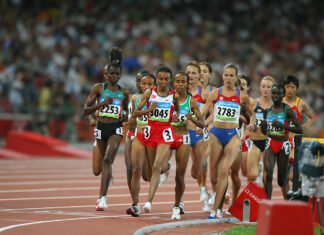
Victories Beyond the Arena: The Untold Story of Africa and the Olympics
In Africa and the Olympics: Winning Away from the Podium (Ohio University Press), Todd Cleveland shows that African countries in spite of modest sporting achievements have achieved nonsporting victories, having used the Olympics to engage in transformative political activity, realize social mobility, and enhance the quality of life for individuals, communities, and entire nations. In his review, Björn Sandahl notes that Cleveland’s well-researched study gives well deserved attention to a part of sport history in great need of new perspectives.
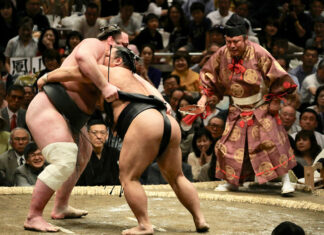
Call for Papers | What is Good In Sport?, Special Issue of The Journal...
The question ‘What is good in sport?’ admits many possible meanings and, as such, can bring together discussions about a wide range of metaethical issues related to how we determine what qualifies as ‘good’ in the context of sport. It also encourages examination of the different sources and evaluations of normativity in sport, including ethical, aesthetic, social, and political aspects: Does it mean what makes sport a worthwhile activity? Does it mean what qualifies as good within sport? Does it mean what good we gain from participating? Whatever way the question is understood, it opens up rich philosophical ground and invites varied perspectives.

Call for Abstracts | “The Ethics of Sex Verification”, in-person workshop | University of...
In March 2026 the IOC announced its revised policy about eligibility in the female category. Since then there has been a lot of pushback from activists and academics alike (see here and here). The aim of this workshop is to give both sides in the debate a fair hearing on this issue. The workshop is interdisciplinary and so we invite contributions from medicine, biology, sport science, sociology, law and philosophy.
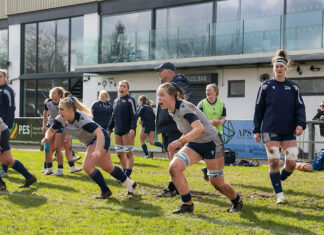
Call for Participation | Changing the Game: Womens Experiences in Sport | Free online...
Join us online for an inspiring event all about women making moves in the world of sports. This event will bring together academics, students, and practitioners to explore some of the contemporary experiences in women’s sport. Don't miss out on the conversation that’s changing the game!
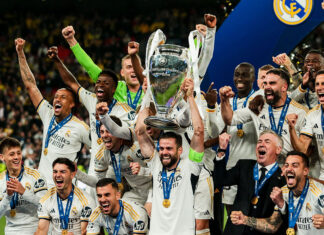
The only ideology is winning: A review of Lourenço Pereira’s take on Real Madrid
In his book The Greatest: Real Madrid's Never Ending Story (Pitch Publishing), Miguel Lourenço Pereira journeys through the many lives of Real Madrid, arguably the most celebrated and supported football club in the world. We asked Łukasz Muniowski for a review, and while the book sometimes appear too much as a hagiography, our reviewer found it worthwhile to turn a blind eye to the high level of reverence, since the book also offers much of interest along the way, for instance the author’s analysis of Real’s Galácticos policy.

Call for Participation | “Slaying the Trolls! Why the Trolls are Very, Very Wrong...
Join the Sports and Society Institute for a virtual discussion with Dr. David Berri (professor of economics at Southern Utah University) and Dr. Nefertiti Walker (Senior Vice President for Academic Affairs, Student Affairs, and Equity, & Professor Sport Management at University of Massachusetts@Amherst) about their book Slaying the Trolls! Women’s sports are exploding. Attendance records are being set in soccer around the world. College stars like Caitlin Clark have people waiting in lines for hours to see her play. And the WNBA – where league revenues have reportedly doubled in just four short years – is clearly taking off.
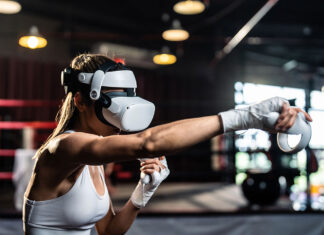
Call for Book Chapters | Handbook on Sport and Innovation (Edward Elgar Publishing) |...
The volume integrates perspectives from sport science, sociology, innovation studies, gender studies, sport management, sport psychology, sport history and sport philosophy to show how innovations develop, spread, and produce effects at multiple scales in sport at local, national and international levels. The editors want to open the conversation to scholars and practitioners across the international sport research community who feel they have something to contribute to it. The Handbook already draws on contributors from more than twenty institutions in Europe, North America, Africa and Oceania, and this is an invitation to widen that group further.

Når sporten forskyder etikken – og barnet lærer at blive i fordelen
Den här veckan, den 20–28 september, utkämpas VM i landsvägscykling, den 99:e upplagan, och det hela utspelar sig i Montréal i Kanada. Vi håller tummarna för de åtta svenska tävlande, men noterar samtidigt att Danmark har ett starkt landslag, med 18 herrar och sex damer. Från Danmark kommer också Johannes Hald Møller, som diskuterar etiska aspekter på den här typen av lopp utifrån de motorcyklar som spelar en framträdande roll där de kör omkring med fotografer och funktionärer och ibland ligger så i loppet att det kan medföra fördelar för deltagare som hamnar bakom dem.
That Was The Week That Was, September 14–20, 2026
idrottsforum’s weekly newsletter gives you the past week’s on-site activities in your mailbox every Monday morning, in the form of a letter with a link to a web page presentation of new publications. Click below to access that page, which also offers you a chance to subscribe to the Monday morning mail in case you’re not already a subscriber. And do friends and colleagues a great favor by telling them about this invaluable and totally free service.

Call for Papers | “Artificial Intelligence in Sport Management Education: Pedagogy & Practice”, Special...
This special issue of the Sport Management Education Journal invites scholarly and applied contributions examining how AI is being integrated into sport management education across undergraduate, graduate, and professional contexts. We seek manuscripts that advance evidence-based pedagogy, document innovative instructional practices, and critically assess the ethical, workforce, and equity implications of AI adoption in sport management education. Consistent with SMEJ’s mission, submissions can be empirical, conceptual, and/or philosophical and should advance teaching and learning in sport management education to prepare future sport professionals.

Call For Papers | “Bodies are Protesting: Reclaiming Body Image in Sport and Movement...
We are excited by the notable and commendable increase in scholarship about understanding diverse body image experiences. This special issue seeks to expand on current framings of body image by foregrounding resistance, collective action, and embodied practices within sport and movement contexts since body image is a dynamic, relational, and socially (re)produced experience, shaped by structural conditions and lived embodiment. We invite submissions that explore how Black, racialized, Indigenous, two-spirited, LGBTQAI+, disabled, fat, thick/thicc, neurodivergent, (and more) people and communities are reclaiming their bodies and re-imagining body image in sport and movement spaces as an act of protest.

Bridging movement and mental health
Yu-Kai Chang and Alessandro Quartiroli’s edited collection Physical Activity, Exercise, and Mental Health: An International Approach to Research and Practice (Routledge) delivers contemporary international perspectives on the critical relationship between physical activity, exercise, and mental health. Our reviewer is clinical psychologist Emily Hindman, and her knowledgeable review shows that while physical activity often benefits mental health, its application needs to consider individual differences, psychological processes, social and cultural context, and the circumstances in which activity is undertaken.

Call for Papers | The 10th International Sport & Discrimination Conference | Université Paris-Saclay,...
The 10th International Sport & Discrimination Conference examines the intersectional nature of discrimination in and through sport. The conference invites contributions from academics, postgraduate researchers, students, practitioners, policy makers and professionals from a wide range of disciplinary and professional backgrounds. The 2027 edition will focus on a central question: how can discrimination in and through sport be effectively tackled? Over recent years, sport organisations, federations, clubs, public authorities and civil society organisations have developed a growing range of awareness campaigns.

Call for Papers | Media, Geopolitics and Sport Mega-Events in an Era of Political...
In recent decades, sport has become an increasingly significant arena through which political interests, ideological rivalries, and geopolitical tensions are expressed and contested. Political leaders frequently use sport to enhance national prestige, strengthen political legitimacy, and project influence on the international stage. Likewise, sport mega-events have evolved into symbolic arenas where states compete politically when direct military confrontation is either undesirable or impossible. We invite original contributions that explore the intersections of media, geopolitics, and interstate conflict.

A solid starting point for students beginning their research journey
Paul McCarthy, Sahen Gupta and Jamie Barker’s Research Methods in Applied Sport Psychology (Routledge) begins with an introduction to conceptual issues within sport and exercise psychology, then goes on to explore the various methods and issues that arise in research then introduces data analysis for qualitative and quantitative research. While pointing out a few weaknesses, mainly pertaining to the presentation of qualitative research methods and data analysis, Peter Hassmén maintains that the book in many ways is an exemplary introduction to sport psychology research for undergraduates.

Vacancy | Associate Professor at the Department of Public Health, Aarhus University | Application...
The Department of Public Health at the Faculty of Health, Aarhus University, invites applications for one or more full-time, permanent positions as Associate Professor within one or more of our main academic areas: Applied Public Health, Clinical Public Health, Epidemiology, Environment & Biostatistics, and Sport Science. The teaching profile for the position is within philosophy of science. The expected start date is 1 May 2027, or as soon as possible thereafter.

Call for Chapters | The Digital Football Reader: Platforms, Data and Power (Routledge) |...
This edition builds upon the foundations established in Digital Football Cultures by examining this new platformed phase of football’s hyperdigitalisation. Rather than asking whether digital technologies matter, the collection explores how platforms, data and algorithmic systems are transforming football cultures, organisations, governance and everyday experiences, whilst considering what these developments reveal about wider social, cultural, political and economic change. The volume will bring together leading and emerging scholars from across the social sciences and humanities to advance a new generation of digital football studies.
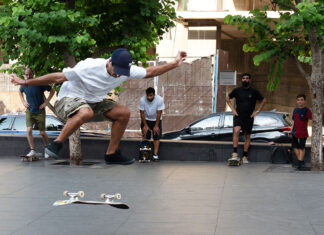
Skaters of Beirut: An ethnographic essay on play in an insecure city
In this ethnographic essay, Johan Fagerberg analyzes the ways Beirut’s skateboarders make sense of the risks and dangers in their city arising from war, political unrest and hazardous streets. The essay is based on his experience of skating in Beirut, as well as on two interviews with skateboarders Ian and Karam. Departing from the view of skateboarding as a city craft, he enters into dialogue with theories of play, fun, and risk-taking to understand the meanings of skateboarding in a volatile urban environment.
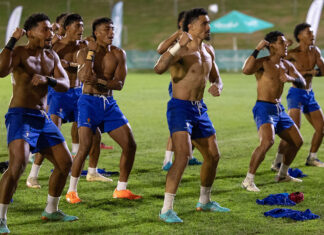
Call for Papers | “Pacific Sporting Cultures”, Special Issue of Journal of New Zealand...
This special issue of the Journal of New Zealand and Pacific Studies, intended for publication in 2027, will explore Pacific and Pasifika, including Aotearoa/New Zealand, sporting cultures and identities. We are seeking the submission papers for consideration for inclusion from a range of disciplines including history, sociology, literary studies, museum studies, cultural studies, film and media studies, and interdisciplinary fields. We welcome submissions from scholars at any career stage, and especially from graduate students and early career researchers.
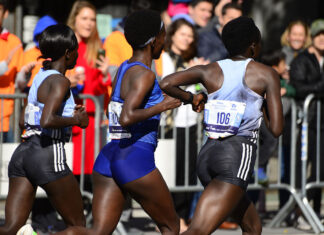
The WiSEAN Podcast: Women’s Sport & Exercise Research | Trish Jackman on flow, and...
Dr Trish Jackman is Associate Professor in Sport and Exercise Psychology at the University of Lincoln and Chair of the Psychology Division of the Chartered Association of Sport and Exercise Sciences (CASES). She is also a registered Sport and Exercise Psychologist, working with athletes, coaches, parents and support staff across a range of sports. In this episode, Trish reflects on a career that began, almost by chance, with an undergraduate essay about flow. She discusses how her thinking about flow has developed over two decades, moving beyond the idea of a single, purely cognitive state of optimal performance towards a more embodied and individual understanding of the experience.
That Was The Week That Was, September 7–13, 2026
idrottsforum’s weekly newsletter gives you the past week’s on-site activities in your mailbox every Monday morning, in the form of a letter with a link to a web page presentation of new publications. Click below to access that page, which also offers you a chance to subscribe to the Monday morning mail in case you’re not already a subscriber. And do friends and colleagues a great favor by telling them about this invaluable and totally free service.

Vacancy | Assistant Professor in Health Promotion | University of Gothenburg. Apply before October...
Health promotion is concerned with understanding how health and well-being can be promoted. Research in this field addresses a broad range of issues related to health promotion practice. It is interdisciplinary and encompasses a variety of theoretical approaches as well as both qualitative and quantitative methods. An important aim is to generate knowledge and expertise to support the development, implementation, and evaluation of health-promoting interventions. The research focuses primarily on food and physical activity.