Miroslav Imbrišević
Allen Hall, London/UK
 On 21st July 2026 five UN Rapporteurs published a communication addressed to the IOC, claiming that the new policy (from 26th March 2026) about eligibility for the female category might infringe human rights. It is odd that it took them four months to write this letter – other organisations reacted immediately. At the end of the letter, they ask the IOC for clarification on six issues. But most, if not all, of the issues are dealt with in the FAQ section attached to the new IOC policy. It looks as if the Rapporteurs have not read it.
In 2023 I wrote on idrottsforum.org about the muddled thinking of some UN Rapporteurs who supported trans inclusion in the female category (there is some overlap of personnel between 2023 and 2026). Like many others, they were (unthinkingly) wielding the ‘discrimination sword’ – and I said at the time:
What would be objectionable is arbitrary discrimination: i.e., treating one person/group differently on a whim, because of malice, or because of an irrelevant difference, such as the colour of one’s hair). Only if you take the position that there is no (relevant) difference between women and trans women could you claim that exclusion from the female category is discriminatory (i.e., wrongful or even unlawful). The UN experts do take this position, hence the use of the phrase “women, and girls in all of their diversity”. The suggestion is that trans women are just one of the many different manifestations of “women”: young, old, married, French, witty, etc. But this view is grounded in a particular ideology (trans women are women), rather than in material reality.
It looks like the Rapporteurs haven’t made much intellectual progress since then. In their most recent communication they write (p. 4):
The new Policy systematically excludes from participation in the women’s elite category all athletes who do not satisfy the Policy’s SRY gene eligibility criterion. As a result, and with only a few exceptions, it categorically excludes intersex persons, including intersex women, as well as transgender and gender-diverse women who were assigned male at birth, regardless of their individual circumstances or the sport concerned [footnote omitted].
Unfortunately, they make the same conceptual mistakes as in 2023. They class trans women (biological males) and people with male DSDs as ‘women’ (but without discriminating, i.e., recognising a relevant difference, between male and female DSD athletes – they are all ‘intersex’).
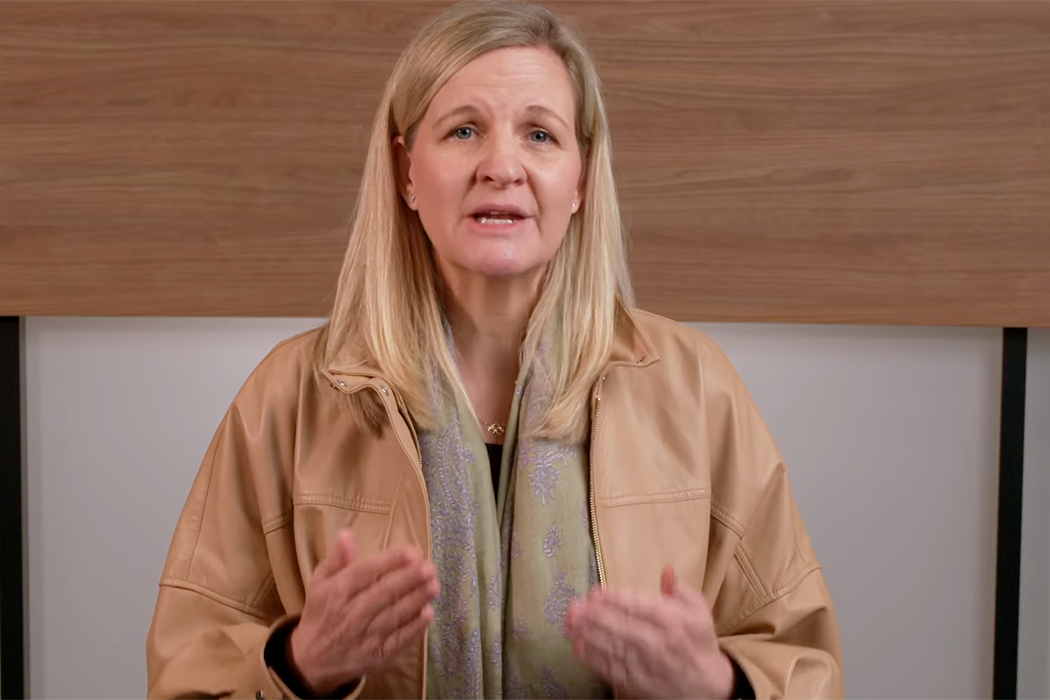
The Rapporteurs admit that there are dissenting voices but suggest that there is strength in numbers (five Rapporteurs signed the letter; p. 7): ‘While one mandate-holder has supported such rules [by the IOC], multiple mandate-holders have raised concerns regarding their compatibility with international human rights standards.’ But, as John Stuart Mill pointed out in 1859 (On Liberty), the majority could be wrong, and the lone voice could be right. Reem Alsalem, the UN Special Rapporteur on violence against women and girls, welcomed the adoption of the new policy by the IOC: ‘The new policy is rooted in common sense, facts, and science. It restores dignity, fairness and safety for women and girls in Olympic sport’.
The Rapporteurs also refer approvingly to the IOC’s Framework Document from 2021. The policy is now widely considered to be seriously flawed. This explains why even the IOC has now said good-bye to it and adopted a new policy to protect the female category from male advantage.
The Rapporteurs object to the spectacle of having your sex status/medical condition discussed in public (e.g., Caster Semenya). They claim that the SRY gene screening (which they wrongly label as a ‘test’) will lead to more humiliating publicity for some athletes. But these athletes never belonged in the female category in the first place, because their health conditions were not picked up early on. The new IOC policy will prevent this from happening – and will thus prevent humiliation later.
The heartache of being told late in life that you don’t qualify for the female category could be avoided by having a one-off cheek swab, once young athletes begin to compete in the female category. Asking female athletes to undergo this test is an acceptable burden. It is minimally invasive; and most elite female athletes support it.
There is no need to revisit all of the errors, misconceptions and myths contained in the current letter. These have been addressed by the IOC in the FAQ, and by various scholars (see here, here and here). But I will comment on the ‘human rights’ issue.
There has been a proliferation of new human rights for decades and Milan Kundera has diagnosed the underlying misapprehension in this trend: not every desire is a human right.
The Rapporteurs write (p. 6): ‘Even if not intended, the 2026 policy risks legitimising similar exclusions beyond the elite levels, deterring individuals from exercising their right to participate in cultural life on an equal basis with others.’ But the path to ‘sport as a human right’ is a long and winding one. Some supporters (like Alexandra Xanthaki, Special Rapporteur in the field of cultural rights) draw the wrong conclusion from the fact that sport is a cultural right. The Rapporteurs succumb to the ‘fallacy of division’. If something is true for the whole (e.g., the deprivation of most or all the rights that form cultural life is a human rights violation), it doesn’t mean that it is true for singular elements. It doesn’t transform the right to sport into a ‘human right’.
But let us assume, for the sake of argument, that participation in sport were a human right. What would follow from it for trans women and athletes with male DSDs? Nothing, because they do not have the (human) right to compete in the female category. All they would have is a (human) right to participate in sport. But they do have that right anyway – they can play sport, but not in the female category. We do not have to invent the notion of ‘sport as a human right’. Males do not have the right (nor a ‘human right’) to compete in the female category – that’s the gist of the new IOC policy.
Now let us look at the nature of the alleged ‘human right’ to sport. Contrast this with the right not to be tortured, the right to life, or the right not to be arbitrarily arrested, imprisoned, or enslaved. You don’t have to put these rights into a cluster of rights (like cultural rights) to declare them to be human rights. They can stand on their own.
Individual (cultural) rights are not human rights as I have explained previously. Is the right to internet access a human right? Is the right to go to the cinema a human right? Is the right to join a dramatic society a human right? No, these are all just ordinary rights. Taken together, many individual rights form the cluster of cultural rights within a society.[1] Being excluded from cultural life would be a human rights violation. For example, Afghan women are excluded from many cultural rights: education, sport, politics, no self-determination, constant supervision by male family members, forced marriage, no driving licence, no independent travel, no loud speaking or laughing in public, and they must not be heard singing or reading aloud from their houses, etc.
Does the right to participate in sport have the universality, importance and urgency of the classic human rights, for example, the right not to be tortured? Well, I know many people who hate sport or who are not interested in sport at all. In spite of this ‘deprivation’, their lives go remarkably well. Excluding trans women from the female category is based on non-arbitrary eligibility criteria (you need to be female) – it is not a systematic exclusion from social and public life, and therefore, it is not a human rights violation.
Copyright © Miroslav Imbrišević 2026
[1] I stress ‘within a society’ because individual rights will vary. The Innuit can claim that hunting whales is part of their cultural life, but a European law professor can hardly make such a claim.