Kevin M. Anzzolin
Department of Modern & Classical Languages & Literatures
Christopher Newport University
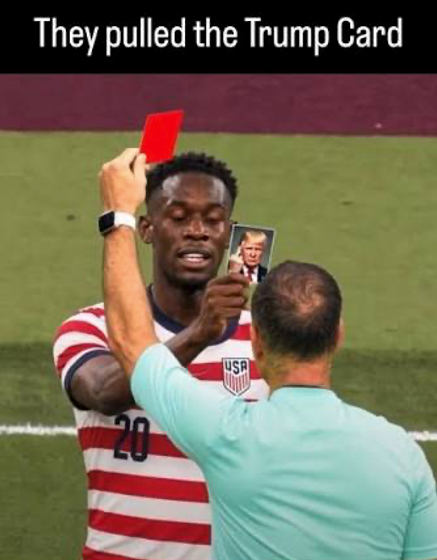
 After the United States men’s national soccer team was defeated by the Belgian squad during World Cup 2026, it was reported that a spokesman for the Iranian team was quoted as saying, “Now the whole world is dancing to celebrate politics’ humiliating defeat by football.” The Iranian representative was ostensibly referring to President Donald Trump’s intervention regarding the red card issued against Folarin Balogun. Trump’s request that FIFA review the one-game suspension against the US soccer phenom ultimately resulted in a reversal. Indeed, the politics of sport — and especially global soccer — has been on the minds of many recently. 2024 saw the publication of Christos Kassimeris’ The Politics of Football as well as The Geopolitical Economy of Football by Simon Chadwick and Paul Widdop. Also in the air lately is the term “sportswashing,” a term inspired by “whitewashing” and defined generally as the way in which public attention is redirected to sports rather than geopolitical conflict. World Cup 2026, which would become the largest and most expansive tournament in history with a 48-team field playing 104 matches across 16 host cities in three countries, was poised to look beyond political conflicts and international quarrels.
If this was indeed the promise, FIFA, our politicians, and perhaps even we — the aficionados, the hooligans, the fans — have failed miserably. Furthermore, and with all due respect to the Iranian spokesman, his comments strangely prove the opposite of their meaning: politics, vis-à-vis sports, remains the dominant element in their rather toxic relationship.
Sports, like politics, are largely characterized by rivalries. Politics, however — distinct from sports — has a greater tendency to devolve into downright conflict (wars, sanctions, embargos). Or, if we were to invoke terms coined by renowned political scientist Chantal Mouffe, modern politics is generally agonistic rather than antagonistic. In The Democratic Paradox (2000), Mouffe defines agonism as a conflict within a relationship of mutual recognition; antagonism effectively seeks to end that relationship:
“What liberal democratic politics requires is that the others are not seen as enemies to be destroyed, but as adversaries whose ideas might be fought, even fiercely, but whose right to defend those ideas is not to be questioned.” (p. 7)
With World Cup 2026, it has been difficult not to see real political antagonism on display — among fans, in the press, and especially online. Whether we understand World Cup 2026 as the resurgence of our political unconscious, or a new politicization, or even just memetic warfare, it is undeniable that what we’ve been seeing cannot be sportswashed.
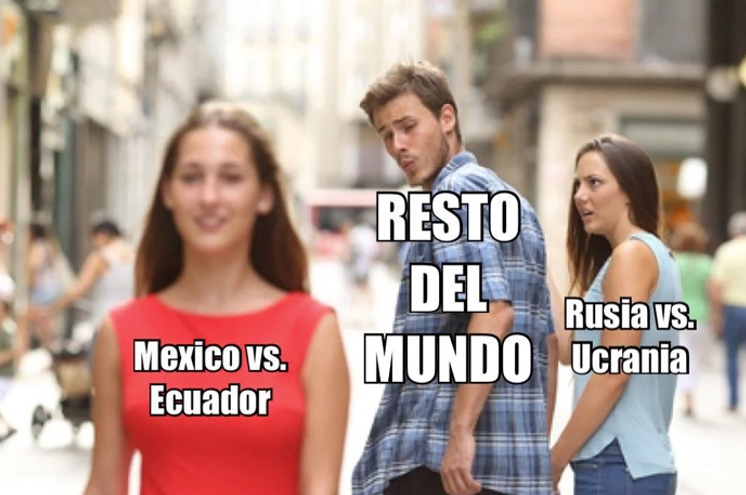
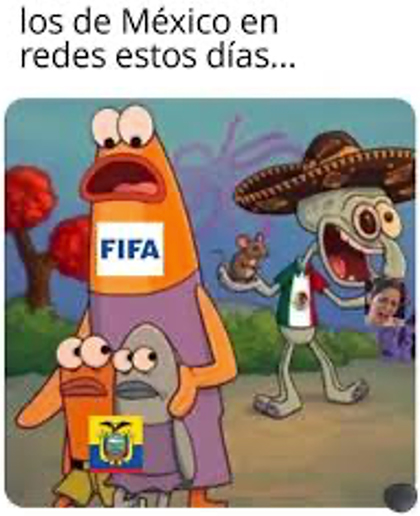
The meme-ified political vitriol of the tournament was on full display in the days leading up to — and following — the June 30, 2026 match between Mexico and Ecuador in Mexico City’s famed Estadio Azteca.
Tensions between Ecuador and Mexico can be traced back to April 2024, when Ecuadorian police entered the Mexican Embassy in Quito to detain former Vice President Jorge Glas, leading Mexico to cut diplomatic ties and file a case at the International Court of Justice. With relations severed and Mexico insisting on an official apology, Ecuador turned to economic measures, introducing a 27% tariff on Mexican imports in February 2025.
Days before the game, in chatrooms, on social media, and on many of my friends’ WhatsApp Statuses, it was reported that Mexican drug cartels had threatened Ecuadorian players, reviving the idea that Mexico is effectively a narco-state.
The slander reached downright presidential levels, with Mexican President Claudia Sheinbaum questioning the veracity of the story. Beyond just casting the claims as “false news,” the president went on to say that the rightwas guilty of promoting these reports. For the past forty years, Mexican presidents have approached World Cup celebrations — and the Mexican national team — somewhat cautiously. It was during 1986 World Cup, held in Mexico, when then-Mexican president Miguel de la Madrid was audibly booed in the tournament’s opening ceremony. The championship game, held in May, seemingly came too soon after the devastating Mexico City earthquake some eight months earlier, in September 1985. Much of the city still lay in ruins when President Madrid took the microphone on May 31, 1986. Since then, the respective Mexican heads of state have shied away from the festivities. Sheinbaum and her Morena Party have, during this World Cup, reestablishedsome bonds previously undone between politics and the sports spectacle.

Mexico’s Partido del Trabajo (“PT”) promoting the 4T or “Fourth Transformation” promoted by Mexico’s Morena party, along advertising World Cup 2026.
But politics cuts both ways. Unfortunately, during the recent match between Ecuador and Mexico, a Mexican fan was seen throwing beer at an Ecuadorian fan, a moment that became viral on social media. It was also reported that Mexican fans sprayed the Ecuadorian team’s moving bus. If Clausewitz’s witticism that “war is the continuation of politics by other means” is indeed true, could we also say that hooliganism is nationalism by other means? If so, what does that say about the inherently and unavoidable political character of sports?
As World Cup 2026 draws to a close, Ecuadorians are still describing Mexicans in ways familiar to those who’ve seen Netflix’s Narcos series: brutal, crazed, and violent. This latest iteration of the perennial tournament has unfortunately proven the limits of sportswashing as a theory, as a keyword, and as a real sociological phenomenon. A 24/7 news cycle, the internet, and the strange allure of nationalism have twisted even the well-meaning agonism of sport into a heinous match of political antagonism.
Copyright © Kevin M. Anzzolin 2026