Łukasz Muniowski
University of Szczecin, Poland
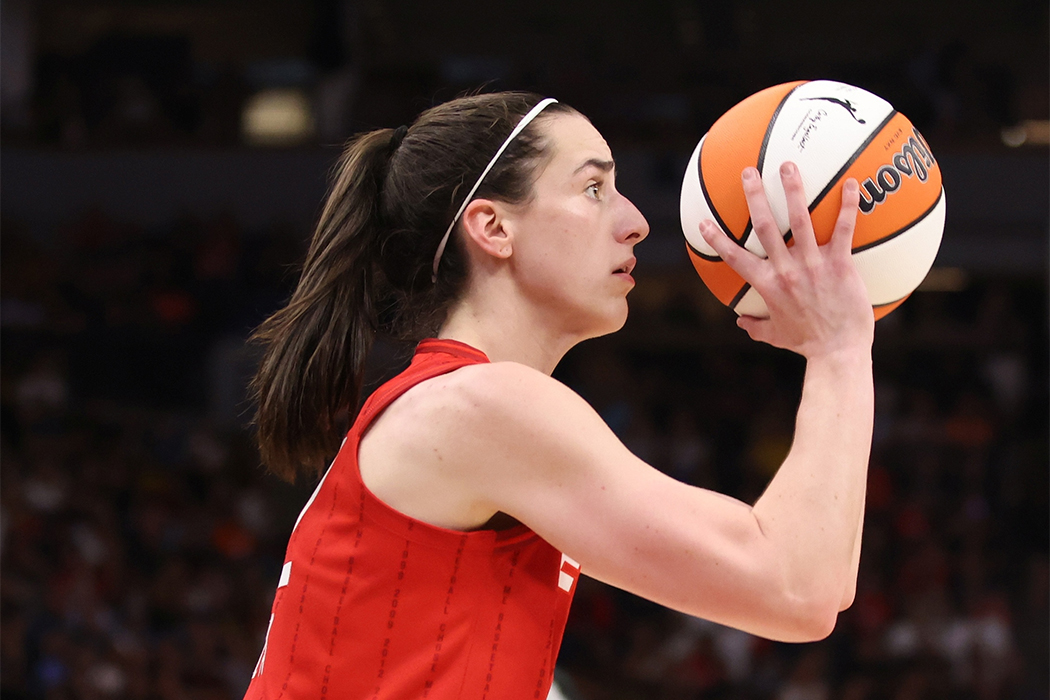
Caitlin Clark is well aware that she has been privileged throughout her life. She made that evident in the Time Athlete of the Year story, saying: “I’ve earned every single thing, but as a white person, there is privilege. A lot of those players in the league that have been really good have been Black players. This league has kind of been built on them. The more we can appreciate that, highlight that, talk about that, and then continue to have brands and companies invest in those players that have made this league incredible, I think it’s very important. I have to continue to try to change that, the more we can elevate Black women, that’s going to be a beautiful thing.”
She is undoubtedly a beneficiary of the social and cultural changes that have taken place. Chris Knoester and Kirsten Hextrum point out that the “increasing awareness of the capabilities of girls and women and support for their rights to participate and pursue interests in all spheres of life and of the complexities and variances in sex, gender, and sexuality has disrupted the prevalence of traditional logics and practices in sports and society.” However, in the context of these changes, Clark remains conventional.
Caitlin Clark is not just white.
She is heterosexual.
She comes from a middle-class family.
She’s an All-American girl.
Her father tore up the lawn and poured concrete over it for her to have a full-size three-point line in her driveway. Her mother brought dessert for the whole Iowa team after home games. Sports Illustrated made a big deal of Caitlin attending basketball games with her brothers. Her family was regularly shown sitting in the stands and cheering her on, with Caitlin showing them the hand heart and the cameras immediately zooming in on her parents and brothers.
As Chad Leistikow of The Des Moines Register said: “Ignoring the family piece of Clark’s story would be to ignore her story. Family built her. Family toughened her. Family is what she’s about.” Caitlin’s brand and career narrative are family-oriented to the point that stories of Caitlin drinking wine with teammates, going on a cruise without the coaches’ knowledge or just cursing during games are presented as endearing, if not relatable. The same goes for her emotional reactions to game situations, which, when exhibited by other players, put them under much closer scrutiny than Caitlin receives.
“The media is obsessed with the fact that she’s white in a sport where majority of the players is Black,” said WNBA expert Cat Ariail. “The WNBA was emphasizing diversity, inclusivity, the intersectional identity of players and here was this girl who was presented as very traditional, but here game was very progressive. That way she’s comfortable and familiar, but also boundary-pushing. As a casual fan you can simply feel good about supporting her.”
 Cat stressed the word “presented” and her criticism was reserved solely for the narratives surrounding Caitlin, never for her personally: “I think she only wants to play basketball. But it’s a conscious decision on her part to focus on basketball and people are able to project a lot of things onto her because she remains a relatively blank canvas compared to more outspoken athletes.”
LSU alum, Adrianne Webb, loves Caitlin Clark’s game. Herself a basketball coach at Shoot 360, she has been impressed with Caitlin’s intangibles and has appreciated the exposure she has brought to the game. But she has been wary of the results that Caitlin’s fans may have had on her perception as an athlete and a person: “I think that the fans who’re saying: ‘oh, she did this’ or ‘oh, she did that,’ make it harder for her to simply focus on basketball and play the game.”
“In my opinion the media coverage of Caitlin is regressive,” said Cat. “Women’s sports have moved away from the heavy emphasis on family and the athlete became the empowered individual, and in her case it’s a hybrid of both approaches.”
Caitlin was simultaneously the 2024 athlete of the year and a media darling, used by pundits as different as Jason Whitlock and Stephen A. Smith to push their own agendas. She says and does all the right things. She seems unfazed by hate, oblivious to pressure. There are no controversies surrounding her. When watching her games, I want her to succeed. Or am I, as a white sports fan, just gullible for the next great white hope?
A discussion about basketball’s great white hope almost always has to open with a discussion of Larry Bird. Back in the 1980s the rivalry between Bird’s Boston Celtics and Magic Johnson’s Los Angeles Lakers propelled the NBA to unprecedented heights. At least that is the most common narrative, one that does not take into account the cultural, technological and economic circumstances, which allowed the two players to become faces of the league. It took generations of players to set the stage, many of which were unfairly forgotten and ignored.
In Under the Boards Jeffrey Lane wrote about Bird in the context of white nostalgia, which he explains as follows: “White nostalgia in basketball (and in sports in general) manifests itself both as a sentimental sense of bewildered deprivation (‘What happened to the white guys?’) and an impassioned devotion to the fair-skinned few who hold the key to white inclusion and the preservation of control.” In the case of women’s basketball there is nothing to reclaim, therefore Caitlin cannot become a part of that narrative. It is not that there never were dominant white players to root for, but rather that there never was a lack of white players for that sort of longing to appear.
When I talked to Jeff for this book, as he was revisiting that chapter on Bird 17 years later, he indeed perceived Caitlin’s rapid rise as a landmark moment for the WNBA, but he compared it to the ascension of a different NBA player: “It’s interesting that it’s happening with a white player and that it isn’t a Black player that seems to be leading the crossover. Bird and Magic where big, but Michael Jordan crossed over.”
Indeed, Caitlin is closer to Jordan than Lebron James or Steph Curry, as both do not shy away from making political statements, while Caitlin is careful in taking a stance on any issue that might seem controversial. Furthermore, Jordan was forgiven for his on-court behaviors because of his extraordinary talent. It was as if fans differentiated between Michael Jordan the player and Michael Jordan the person whenever his behavior was not what one would expect from such a celebrated athlete.
Still, some similarities between the narratives of Caitlin’s and Bird’s careers are uncanny, but some context is necessary to look past the painfully obvious white skin color and Midwestern upbringing. And this is where Jeff’s book comes in handy. The chapter on Larry Bird and white nostalgia opens with a story about rookie Bird being sighted in a Boston bar and immediately establishing bonds with the locals, who saw him as exhibiting the same values they held dear. Wright Thompson’s landmark article about the Hawkeyes, “Clark and Iowa Find Peace in the Process,” opens with women’s basketball players reminiscing about renting a yacht for a day, drinking and snorkeling by the Croatian coast.
On the surface these stories could not be more different. The first one depicts Larry Bird as hard-working, blue-collar guy who drinks beer. For a regular person in the late 1980s, Bird was relatable. As observed by John Matthew Smith, “Bird offered the NBA and its sponsors a marketable image of a white, blue-collar Middle American whose traditional values fit into the dominant conservative political climate.” In Thompson’s story Caitlin is fragile, middle-class, and she drinks wine. And that narrative is relatable today, while also being aspirational for both girls and their parents.
Cat points out that one of the best WNBA players of all time, Diana Taurasi, who came from blue-collar Chino, Southern California, should become the perfect player for white, blue-collar fans to root for. Taurasi is the daughter of an Italian father and Argentinian mother, who immigrated to the U.S. before Diana was born.
“Taurasi’s story is one of individualism and people recognize that she was very good, but there was not the same emotional connection to her than to other players,” said Cat. “It’s different with Caitlin, where men who are my dad’s age, in their 50s and 60s, really like her. It’s weird, because they look at her like: ‘Oh, this could be my daughter.’”
I asked Jeff if it could be said that the guys who grew up rooting for Bird and/or longing for a similar player to appear established their families, moved to the suburbs, and now look at Caitlin as the daughter that they never had: “Yes, the sort of the suburban dad, the parents of athletes kind of thing might be at play here. Especially since in the US there’s such an investment in youth sports… and competitive youth sports is just such a big thing in this country.”
From The Caitlin Clark Effect: Women’s Basketball and
the Rise of a Transformational Star © 2026 Łukasz Muniowski
by permission of McFarland (McFarlandBooks.com).