Alexis Sossa
Society and Health Research Centre, Universidad Mayor, Chile
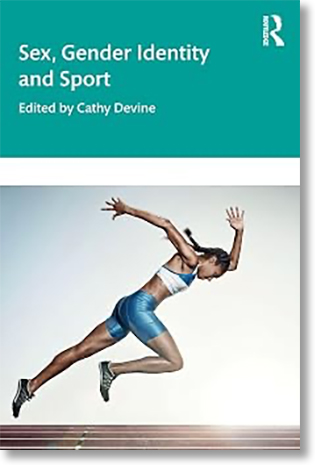
Sex, Gender Indentity and Sport
370 pages, hardcover
Abingdon, Oxon: Routledge 2026
ISBN 978-1-03-290123-7
The intersection of sex, gender identity, and competitive sport constitutes one of the most contentious debates in contemporary sport sociology. Few policy arenas expose the tensions between equality and difference, inclusion and categorisation, bodily materiality and subjective identity, or scientific expertise and political legitimacy so starkly. Sex, Gender Identity and Sport (Routledge, 2026), edited by Cathy Devine, approaches this debate with an explicitly interventionist agenda. Mobilising scholarship across sport history, physiology, medicine, philosophy, and discrimination law, alongside the lived experiences of female athletes, the volume defends the preservation of sex-based sporting categories while challenging eligibility policies grounded primarily in gender identity.
The volume’s central proposition is straightforward: biological sex remains indispensable for understanding athletic performance and, consequently, for organising fair competition in sports characterised by sex differences. Contributors argue that the physiological adaptations associated with male puberty confer substantial performance advantages that subsequent testosterone suppression cannot fully erase. The book frames the protection of female sporting categories not as an exclusionary anomaly, but as a necessary institutional mechanism designed to offset material biological inequalities.
The significance of the volume extends beyond the immediate policy debates surrounding transgender participation. Its deeper contribution lies in illuminating how sporting categories function as deeply political and sociological institutions. However, the book’s argumentative coherence, rather than offering a genuinely symmetrical examination of competing theoretical paradigms, operates predominantly as a defence of one faction within an increasingly polarised debate. While this endows the text with considerable political and rhetorical clarity, it raises questions regarding the breadth of its engagement with opposing scholarship, its handling of empirical uncertainty, and the underlying assumption that biological claims can straightforwardly resolve fundamentally normative questions of classification.
A historical sociology of the female sporting category
The first section equips the book with a crucial historical foundation. Rather than treating women’s sport as a naturalised institutional arrangement, the contributors situate it within a broader history of female exclusion from physical culture and competitive sport. The historical account emphasises that modern sporting institutions were largely built upon androcentric assumptions regarding the athletic body. Consequently, women entered sport through structures that had already coded athleticism, competition, and physical strength in predominantly masculine terms.
The female category exists precisely because treating all competitors as formally equal can, in practice, reproduce substantive disadvantage.
This is one of the volume’s strongest sociological points. Insisting that sex categories be understood historically rather than merely physiologically is vital, as it prevents the contemporary controversy from being reduced to a narrow technical dispute over testosterone metrics. Women’s sport, the book illustrates, is not simply a biological classification imposed upon an otherwise neutral arena; it is the enduring product of historical struggles over institutional access, resource allocation, recognition, and bodily autonomy.
This discussion of historical exclusion is valuable for establishing a compelling paradox at the heart of contemporary sport. The female category exists precisely because treating all competitors as formally equal can, in practice, reproduce substantive disadvantage. In this light, sex segregation is interpreted not as the antithesis of equality, but as one historical mechanism through which equality has been pursued.
The chapter on physical activity extends this argument beyond elite sport. The authors connect the protection of women’s sport with broader inequalities in participation, suggesting that girls and women already face substantial social and cultural barriers to physical activity. The female category therefore has implications not only for Olympic medals and professional careers but also for participation, health and bodily confidence at grassroots level.
This is an especially productive analytical move. It broadens a debate that is frequently dominated by exceptional elite athletes and spectacular controversies. However, the argument would benefit from greater empirical differentiation. Elite competition, school sport, recreational participation, and community physical activity operate under different organisational frameworks. The reasons for maintaining sex categories, and the consequences of changing them, may therefore differ across these settings. A stronger sociological analysis would resist treating “sport” as a single institutional domain.
Biology, puberty and the problem of reductionism
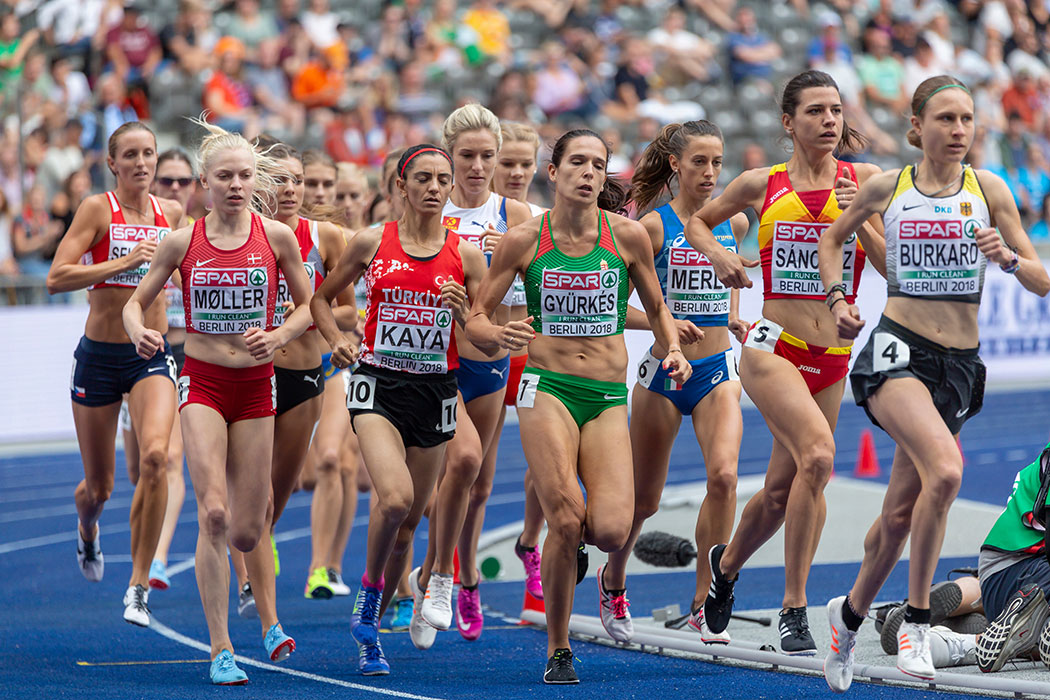
The second section serves as the empirical core of the volume. Its contributors argue that sexual dimorphism produces substantial differences in athletic performance, particularly following male puberty. Testosterone levels, muscle mass, skeletal structure, cardiovascular capacity, and other physiological characteristics are presented as mechanisms by which male puberty confers performance advantages across many sports.
The text takes particular aim at the premise that testosterone suppression can adequately mitigate these advantages. According to the volume’s analysis, reductions in circulating testosterone do not fully reverse the physiological changes induced by male puberty. Instead, skeletal dimensions, muscle characteristics, and other structural adaptations reportedly persist despite sustained hormone therapy.
This establishes an important intervention. Sport remains one of the few institutional contexts where marginal physiological differences yield highly consequential outcomes, precisely because competitive performance is explicitly structured around measurable bodily capacities. Therefore, the book convincingly argues that questions regarding biological sex cannot be dismissed as irrelevant in sporting arenas merely because their significance has been decentred in other social domains.
Nevertheless, this section also illustrates a methodological problem. The existence of average sex differences in athletic performance does not by itself determine how sporting organisations ought to classify individuals. Moving from the proposition that biological sex is relevant to performance to the proposition that biological sex should be the sole or primary criterion for eligibility requires a normative argument. The physiological evidence can establish that bodies differ; it cannot, on its own, establish what institutions ought to do about those differences.
This distinction is sometimes blurred in the volume’s overall argumentative structure. Biological findings are presented as if they necessarily entail a particular policy conclusion. Yet classification systems always involve normative choices. Age categories, weight categories, disability classifications, and sex categories all translate empirical differences into institutional rules, but the legitimacy of those rules depends on purposes, values, and conceptions of fairness, as well as physiology.
The book’s treatment of differences of sex development (DSD) is similarly important but potentially reductive. The volume insists on distinguishing DSD conditions from transgender identity and treats them as conceptually distinct phenomena within its framework. However, the sociological implications of these cases deserve more sustained attention. Sporting regulation does not merely classify abstract biological bodies; it governs people whose bodies may not fit neatly into institutional categories. The ethical and political question is therefore not whether sex is binary at the level of reproductive biology, but how institutions should translate complex biological variation into rules governing actual human beings.
Feminism, materiality and the politics of classification
This compilation’s most intellectually interesting section is its theoretical engagement with feminism. The contributors place materialist feminism in opposition to approaches influenced by queer theory and gender identity theory. In the volume’s account, materialist feminism understands women’s historical oppression as fundamentally connected to the material realities of female bodies and reproductive sex, whereas gender identity approaches place greater emphasis on subjective identity and the social construction of gender.
This framing is useful because it demonstrates that the controversy cannot be reduced to a disagreement between “science” and “ideology”. There are competing theories of the social world involved. Different theoretical traditions understand the relationship between bodies, identities, institutions and categories in different ways.
Materialist feminism is not internally homogeneous, and the relationship between sex, gender, embodiment and political categorisation has generated extensive debate within feminist scholarship itself.
The book argues that categories themselves can act as instruments of justice. The female sporting category can be understood as a distributive mechanism through which opportunities, recognition, financial rewards and institutional resources are allocated. From this perspective, the relevant question is not merely who is included or excluded but how institutional goods are distributed.
However, the theoretical discussion would have been considerably stronger had it engaged more extensively with the internal diversity of the positions it opposes. “Gender identity theory” and “queer theory” are sometimes treated as a relatively unified intellectual position. This risks constructing an overly simplified opponent. Queer theory encompasses diverse approaches to embodiment, identity, institutions, and power, while scholarship on transgender participation in sport encompasses physiological, ethical, legal, and sociological perspectives that cannot be reduced to self-identification alone.
The same applies to feminism. Materialist feminism is not internally homogeneous, and the relationship between sex, gender, embodiment and political categorisation has generated extensive debate within feminist scholarship itself. A more dialogical engagement with these disagreements would have strengthened the book’s central argument.
Law and the institutional politics of sport
The legal section moves the discussion from philosophical principles to institutional governance. Particular attention is given to the International Olympic Committee’s 2021 framework and to subsequent policies adopted by international federations, including World Aquatics and World Athletics. The volume interprets these developments as evidence of fragmentation in international sporting governance.
This institutional perspective is valuable because it reveals that no single, universally accepted authority can resolve the conflict among inclusion, competitive fairness, safety, and sex-based rights across all sporting contexts. The discussion of the UK’s Sports Council Equality Group is particularly prominent. The proposed distinction between an “Open” category and a protected “Female” category is presented as a mechanism to reconcile participation with sex-based competition.
The proposal is conceptually significant because it challenges the assumption that inclusion necessarily entails universal access to every existing category, instead suggesting the creation of new institutional spaces. That said, the book could have examined more closely the practical difficulties associated with such a model. An Open category may be formally inclusive yet difficult to sustain competitively in sports where participation numbers, funding structures, and athlete development pathways are highly uneven. The institutional feasibility of creating meaningful competition in such categories is therefore an empirical question rather than a logical consequence of the proposal itself.

Similarly, the legal analysis of the UK Equality Act 2010 offers an important corrective to claims that anti-discrimination law demands identical treatment across sexes. The volume emphasises provisions on gender-affected activities and the specific circumstances that justify single-sex participation. Yet legal permissibility and moral desirability should not be conflated. The fact that a legal framework permits sex-based distinctions does not settle the normative debate over when and how those distinctions should be exercised. Law provides institutional boundaries; it does not eliminate political disagreement within those boundaries.
The most compelling contribution: athletes’ voices
The final section, centring on Canadian high-performance athletes and Olympians, effectively grounds the debate in lived experience. The analysis reveals widespread participant concerns regarding fairness, institutional decision-making, and the potential repercussions of speaking publicly on transgender inclusion. This empirical grounding is decisive. Sporting policy debates are routinely dominated by administrators, legal scholars, activists, and scientists, often reducing the athletes who actually inhabit these competitive environments to secondary subjects of discussion.
The reported culture of silence warrants deeper investigation. If athletes fear professional or social reprisal for discussing eligibility, this raises critical questions concerning institutional power, sponsorship, and governance. However, positioning these athletes as a “silenced majority” requires empirical caution. A sample of 25 Canadian athletes cannot represent female athletes globally, nor domestically. The distinction between a robust qualitative finding and a generalisable population claim remains vital.
Furthermore, transgender athletes’ voices appear considerably marginalised in this account. While understandable given the book’s objectives, this asymmetry limits its capacity to analyse the conflict as a multidirectional social phenomenon. A comprehensive sociology should examine how diverse groups navigate exclusion, institutional vulnerability, and bodily regulation, without assuming that the costs of classification are borne solely by one side.
Beyond the binary: what the book leaves unresolved
What stands out most about the book is its unyielding argumentative focus. By weaving together physiology, feminism, distributive justice, and legal analysis, the volume constructs a powerful institutional critique of identity-based sports policies. Yet, this intense drive for coherence comes at a cost. The text struggles to accommodate empirical uncertainty, glosses over how these dynamics might shift across different levels of competition, and largely downplays internal debates within the scientific community. Because the language leans so heavily towards the categorical, frequently dismissing opposing views as mere “ideology” while treating its own biological framework as an inescapable reality, it ultimately sacrifices analytical nuance in favour of a forceful political intervention.
For a sociological audience, this is particularly important. Sociology is concerned not only with determining which biological proposition is correct but with examining how knowledge becomes institutionalised, how categories acquire authority, how competing forms of expertise are legitimised, and how bodies become governed through classification. The controversy over sex and gender in sport is therefore itself a sociological object.
From this perspective, the question is not simply whether sex is biologically real. It is also why particular understandings of sex become institutionally authoritative in particular historical moments, how sporting organisations negotiate competing definitions, whose knowledge counts as legitimate, and how athletes experience these regulatory regimes.
Conclusion
Sex, Gender Identity and Sport is most valuable not as a definitive resolution to the transgender sports debate, but as a provocation regarding the politics of bodily classification. While its explicitly partisan orientation and tendency to dismiss opposing perspectives as “ideology” leave complex empirical and normative questions unresolved, its enduring contribution lies in insisting that sports politics are inextricably bound to body politics. By exposing sporting categories as deeply contested spaces shaped by biology, identity, and institutional power, rather than neutral administrative arrangements, Devine’s volume offers a substantial contribution to contemporary sport sociology.
Copyright © Alexis Sossa 2026