Łukasz Muniowski
University of Szczecin, Poland

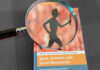
The Fast Track: Inside the Surging Business of Women’s Sport
200 pages, hardcover
Philadelphia, PA: Temple University Press 2025
ISBN 978-1-4399-2508-9
I have been covering women’s sports for a couple of years now, mostly basketball and football, and from what I have experienced, by attending games and talking to players and coaches, Jane McManus’ book The Fast Track is very much on point, as the author shows a great understanding of the economical and cultural shifts that lately occurred, making the surge of women’s athletics possible. Her perspective is clearly broader than mine, as is her understanding of women’s sports, so I have found her book highly informative and uplifting. In the introduction McManus stresses the importance of values to changes experienced by women’s sports, explaining that: “economics is a science, but not in the way that chemistry is, and you can’t take cultural values such as identity out of the equation” (p. 6). Investing in women’s sports, whether as a team owner or a fan, is not only about financial gain but also social improvement and equal opportunities which translate into recognizability and representation.
To make her point, McManus provides various historical examples, paying homage to pioneers such as Kathrine Switzeror Billy Jean King, and provides commentary from modern-day experts on the significance that these particular athletes had for the world of sports. Experts include journalists, activists, executives and academics, who provide a wide range of perspectives on the issue at hand. The main lesson is that while the names of athletes are those we remember the most, the changes would not come about if it was not for allies who either believed in them or provided them with resources to make changes happen.
McManus provides a particularly convincing argument in why tennis was the best vehicle for cultural change, highlighting uniforms preserving femininity of the athletes, mixed doubles and historical presence of men and women in grand slam tournaments.
When King partnered up in the 1970s with Virginia Slims, a female-oriented cigarette brand, the decision could be perceived as questionable but nobody else was willing to put up the money to sponsor women’s tennis on such a scale. And considering how gambling companies are now deeply involved in professional sports, the partnership does not seem that morally dubious. Furthermore, the presence of McDonald’s and Coca Cola logos on pitchside boards is also widely accepted. McManus provides a particularly convincing argument in why tennis was the best vehicle for cultural change, highlighting uniforms preserving femininity of the athletes, mixed doubles and historical presence of men and women in grand slam tournaments.
Particularly worthy of attention is McManus’ discussion of the three layers of sports media: the (new) audiences, the broadcasters and the media in general. She stresses that the main mistake of marketing women’s leaguesm, such as the WNBA, was catering to the male audiences who were already watching men’s equivalents of their disciplines, instead of reaching out to new fans, either discouraged with modern sports or not knowing that women’s sports are not only about spectatorship but more so taking a stand on various issues. As pointed out by McManus: “no one needs to win over the haters when women’s sports are minting new fans” (p. 75). This perspective brings in new business partners who want to be associated with certain ideas, who are best embodied by athletes who physically stand for strength, excellence and perseverance, something femininity was considered contrary to during women’s sports formative years.

The author’s discussion of ESPN’s role in women’s sports coverage is the only problematic part of the book. While it is understandable that the author does not want to cast too much shade on the network, as it willingly provided the data for her to use in The Fast Track, plus she was one of the founders of espnW. Still, acknowledging that if it was not for ESPN, women’s sports would rarely appear in American households is faint praise, as the sports network needed content and due to its affordability, women’s sports provided new and fresh programming whenever necessary. What is more, Jemele Hill’s work for the network in the 2000s is supposed to prove its “record in diversity” (p. 79), but the fact she was the only Black woman writing a sports column for the network sounds more like tokenism. Hill’s criticism of and firing from ESPN or the controversies surrounding Rachel Nichols and Maria Taylor seem to prove just that. While the network is criticized, the arguments against the so-called “worldwide leader” seem rather mild. Furthermore, no criticism is directed at Kobe Bryant, who is characterized as an ally of women’s sports. While he became one later on, largely due to the influence of his daughter, not preceding that label without even a brief mention of what happened in Colorado in 2003 and how the Lakers organization backed Bryant throughout the consequences of the event is a bit disappointing.
Fortunately, the book also includes examples of less controversial allies of women’s sports, like Andy Murray or Dwyane Wade, who highlight the importance of support for the advancement of issues that are simply just.
McManus’ book is an uplifting read, one that will make one appreciate how much has been done when it comes to women’s sports rather than lament how much there is still to do. The conclusion highlights further directions to consider and actions to take, proving that after initial missteps, the road is now known, open and clear.
Copyright © Łukasz Muniowski 2026