Christoph Wagner
Université Gustave Eiffel
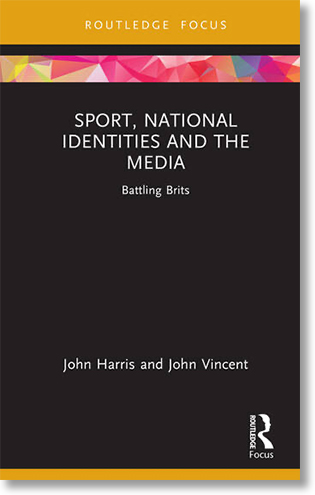
Sport, National Identities and the Media: Battling Brits
98 pages, hardcover
Abingdon, Oxon: Routledge 2026 (Routledge Focus on Sport, Culture and Society)
ISBN 978-1-04-102895-6
This series of books called Routledge Focus delivers short volumes – less than a 100 hundred pages – to showcase cutting edge research. The current volume brings together a thematic collection of essays from both authors researching the role of the media in creating an identity within the realm of sports. And while these topics have been well researched, the authors provide insights into British sports post-Brexit. This provides friction as Scotland and Wales as the “other” parts of Great Britain researched here have largely voted pro-EU which cannot be said about England. Therefore, the book delivers interesting insights into the triangular relationship media-sport-identity. In the sporting realm, identity is most often created through the establishment of imagined communities, which are reflected through the prism of the shirts those teams and athletes mentioned in the book are wearing (p. 2).
The book is divided into seven chapters, of which the first and last serve as introduction and conclusion, respectively. In any serious study of identity and sports, football must not be amiss, yet the authors duly admit that football takes up too much space in the media debate. This is little surprising given the popularity of the sport. Chapter 2 is dedicated to a press analysis of Scottish papers around the World Cup match of the Scottish and English women during the 2019 World Cup in France. The same is repeated in the following chapter, this time it’s the men’s teams of Wales and England who met at the 2022 World Cup in Qatar. It was the first time since 1958 for Wales to qualify for the final tournament. From team sport to an individual sport, tennis namely, as chapter four interrogates the legacy of Andy Murray, the first British male Wimbledon winner since Fred Perry in 1936. Chapter five looks at three athletes who were not born in Britain bun nonetheless represented Team GB at the Olympics: Mo Farah, Tiffany Porter and Sky Brown. The final thematic chapter then turns its focus on the television programme Sports Personality of the Year, which is broadcast by the BBC and for a long time was a key date in the build-up to Christmas. (p. 71) The book is then closed by a brief conclusion (chapter 7).
Yet, recent examples of the mega-events indicate that too much emphasis is placed on legacy and not enough attention is given to criminally underestimated budgets for building the sites of sports.
Football matches involving England are often underpinned by military language – this was the case during the second half of the 20th century and specifically when England played West Germany. However, it is refreshing that this is not the case for the women’s game and the authors do not fail to highlight this. In the second chapter, three Scottish papers – Herald, Scotsman and Daily Record – were analysed over the course of three days around the match between England and Scotland. The research presented here is divided into three sections: expectations as the game between Scotland and England was highly anticipated and hopes were put on a positive result for Scotland; limitations which highlights the problems and challenges women’s football faces, not only in media coverage but also in structural terms; and celebrations that provides an outlook for further growth options for the women’s game. This makes sense and is easy to be carried out for the short time frame of three days. However, there are shortcomings in that the research only looks at Scottish papers and how these cover the Scottish women’s national football team, yet a more comprehensive picture would have been possible had English papers been included. Omitting the English perspective deprives the reader of information on the state of the game in England. The Scottish papers form a solid foundation yet show that more work needs to be done in the future. Again, the exclusion of English papers prevents a comparison between the two countries and their respective development of women’s football. As the series description suggests, it is meant to offer a brief glimpse into cutting edge research, which may explain the focus on Scotland at the expense of a comparison.
The following chapter presents a study of the group game between Wales and England at the 2022 World Cup in Qatar. The last time England and Wales had both qualified for a World Cup before Qatar was in 1958. Wales is the smallest constituent of Great Britain, a principality that has been allied with England since the 1536 Act of Union. The relationship with England is better than between England and Scotland. This did not prevent some commentators to speak of the Battle of Britain, though the term was not used directly, it was disguised as (Saint) David versus Goliath by The Times or “Do or Dai” in the Sun. (p. 30-32) However, for once the English are not at fault to stir up any controversy as it was Gareth Bale, the Welsh captain who spoke of the game against England as being “… not just about football, it is about the growth of our country …” (p. 32) which allows people to know Welsh history better. These findings are insightful, yet once again they lack a contrasting perspective to allow a comparison. Admittedly, there is no large Welsh press, yet there is Wales Online and the BBC Wales to offer a Welsh perspective.
Legacy has become a very important issue in sports, meaning that the events of today will create something positive in the years to come. Yet, recent examples of the mega-events indicate that too much emphasis is placed on legacy and not enough attention is given to criminally underestimated budgets for building the sites of sports. But it is also sportspeople who create legacies and Andy Murray is one of them. It is here where the officials and administrators failed, according to the authors. This may have several reasons but indicates an aloofness of those who govern sports.
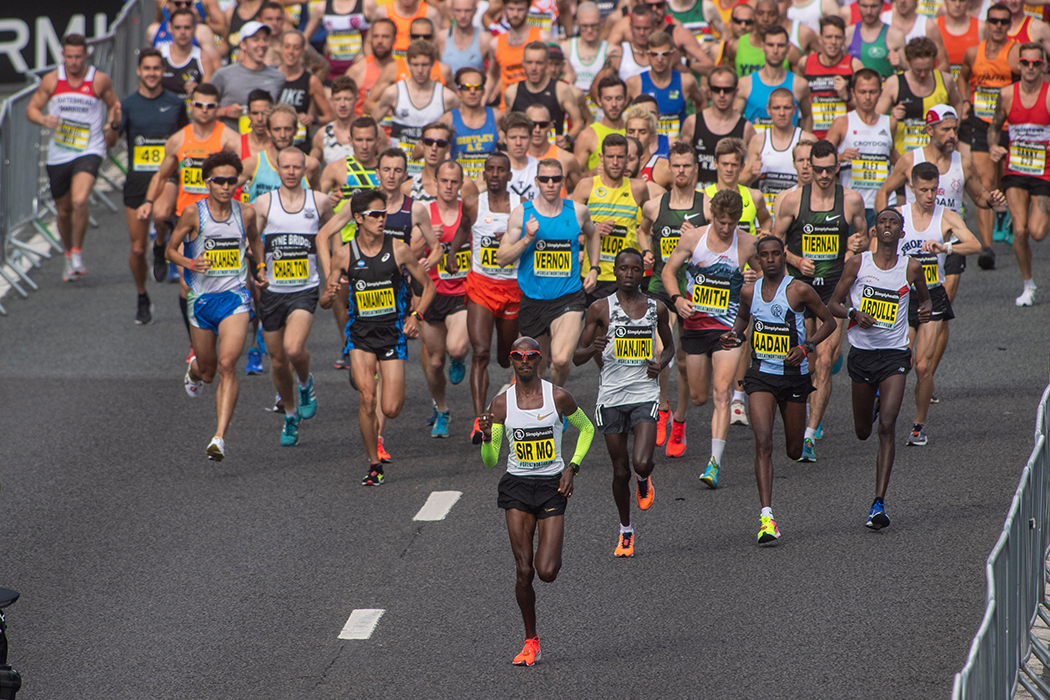
Chapter five offers case studies of Mo Farah, Tiffany Porter and Sky Brown and their perceived «otherness». The term “Plastic Brits” originates from Martin Samuel, chief sportswriter of the Daily Mail. The theoretical framework is that of Elias’ and Scotson’s study “The Established and The Outsiders”. The established norm is represented by the dominant White ethnic group while the outsiders are the “racialised other” (p. 55). Yet, identity in Britain has always had “fuzzy frontiers” and identities intersect in post-colonial Britain. It becomes clear that migration and migrants in sport remain an important issue – for the public and in the media. It also demands for the athletes to stand up for themselves when confronted with questions about their mixed heritage. One of those rebuttals from Mo Farah is quoted at length in the book and shold be quoted here, too:
Look mate […] this is my country. This is where I grew up, this is where I started life. This is my country, and when I put on my GB vest, I’m proud, I’m very proud. (p. 58)
Unfortunately, the other two athletes in this chapter do not possess this capacity to address the media in their own language to bring their point across. In fact, other factors made it more difficult for Tiffany Porter and Sky Brown. Porter faced criticism over a tweet on July 4. Born in Michigan she was accused of not being “British enough” (p. 61) and Mo Farah came to her support. Even members of the government demanded her to know the words of the national anthem. Sky Brown who came to prominence on the back of outstanding performances with the skateboard had to content with condescending comments about her age; she was 13 years of age when she was part of Team GB for the Tokyo Olympics. Indeed, a minimum age for participation should be discussed for the sake of children’s development. This exists in some sports, yet should apply across the board of all Olympic sports. Further, her sport, the addition of Skateboarding into the Olympics was questioned by traditionalists who argued that the sport is still finding its relevance (p. 63). Porter and Brown were scrutinised and labelled as «not quite one of us» based on their origins and their accents and perhaps also, in the case of Brown because of her sport.
The final thematic chapter looks at an institution in British television: the annual Sports Personality of the Year (SPOTY) award, which itself has become a mega event and serves as an unofficial kick-off for the Christmas period in Britain (p.71). Television is one of the few campfires each nation possesses, and which has the ability to unite a country; another would be sports, notably big events such as those events already mentioned here. Thus, sports on television is one of the biggest unifying moment for a nation, to create common memories and an imagined community. SPOTY has undergone an immense development since its inception in 1954: from a small television studio talking about sporting achievements and events, it has become a mega-event itself. It is very much a sports chatter moment as described by Umberto Eco. There are drawbacks, however. Most notably its lack of diversity. Given the size of the populations of Great Britain it is little surprising that the majority of awards went to English sports, people, yet only 17 times a woman has won the award, i.e. less than a third. For people born outside of Britain or of mixed origin, the figure does not look much better.
Despite minor issues, this book is an important addition to the literature of sports and media in Britain since the Brexit referendum in 2016 and the increasing rise of right-wing narratives. Identity is not solid but instead is a shapeshifting, liquid entity that evolves. This comprises sport as one of the most important cultural practices of the 21st century. This book offers a focused insight into recent developments and as such should be on the literary canon for undergraduate and postgraduate students alike.
Copyright © Christoph Wagner 2026