Erkki Vettenniemi
University of Jyväskylä

To the Limit: The Meaning of Endurance from Mexico to the Himalayas
264 pages, hardcover
London: Bloomsbury 2024
ISBN 978-1-3994-0342-9
‘God is happiest when he sees people running, dancing and drinking tesguino,’ argues a Mexican rarámuri to Michael Crawley, the British anthropologist whose previous book Out of Thin Air (2020) provided fascinating insights into the life and toil of Ethiopian elite runners. In his second non-academic tome the globe-trotting scholar encounters (among other people) Spanish speakers, as the quotation indicates. Tesquino is the Spanish name for a fermented corn beverage.
Titled To the Limit, the new book (published, admittedly, more than a year ago), comprises eleven chapters on sportive extremism. What motivates indigenous and non-indigenous runners for whom the standard marathon is not enough? How exactly might endurance endeavors ‘relate to what is going on in society more broadly’? In other words, is there a way to build endurance in an enlightened manner?
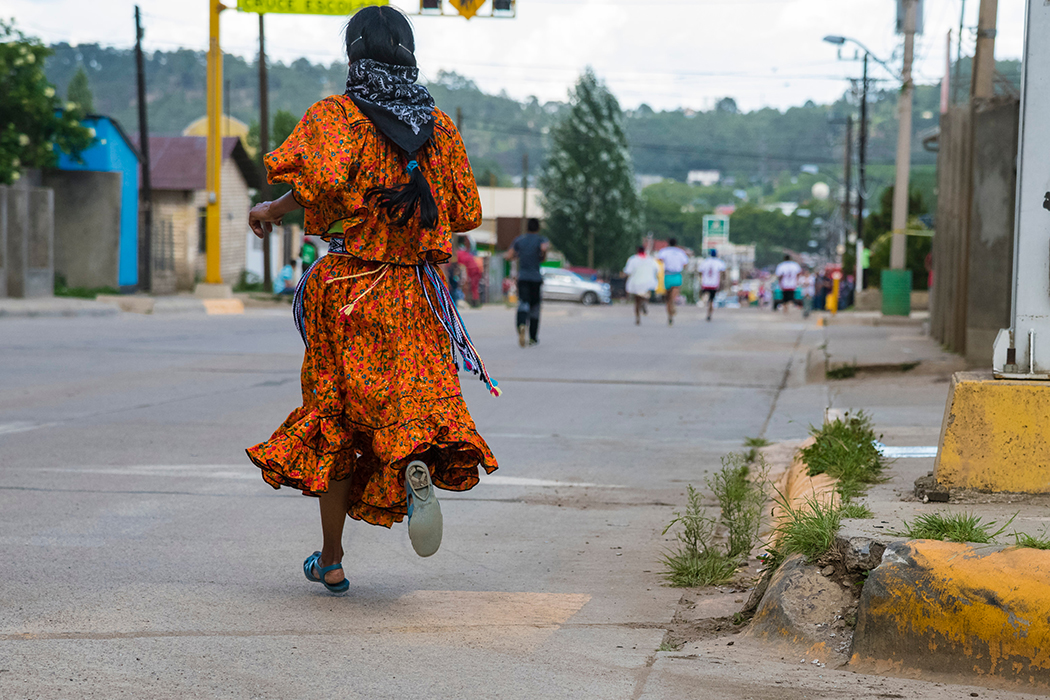
As some members of the so-called running community may still remember, the short-lived barefoot or ‘minimal running shoe’ boom coincided with the publication of Christopher McDougall’s Born to Run (2010). In fact, it was more than a coincidence. McDougall’s starry-eyed discovery of rarámuri runners took the shoe industry by storm, and it is to Crawley’s credit that his narrative straightens the record on the rarámuri running culture. The people previously known as Tarahumara are not supposed to run for the sake of mere running. For them, extended acts of running represent communal, fundamentally religious rites which may or may not be accompanied by copious consumption of tesguino.
After having nearly circumnavigated the world by air, the intrepid anthropologist familiarizes himself with strictly homegrown running fads. No more naughty carbon emissions for him!
Another non-European and therefore ‘exotic’ ethnic group covered by Crawley lives and trots in the Far East. Traditionally, the Sherpas of Nepal and India are associated with mountaineering, but some of them take part in trail races, too – with modest success thus far. Judging by Crawley’s findings, linguistic prerequisites already exist for major victories. Sherpa runners tend to avoid debates related to pain, probably because the Sherpa language itself has no word for ache
Throughout the fast-moving, unillustrated chapters the author plays the role of a participant observer. He runs, jogs, climbs and occasionally cycles alongside (or just behind) his informants. He is also astute enough to describe the varied outings in a suitably self-ironic manner. A 2.20 marathoner in his prime, Dr Crawley is no longer at home on slippery trails that rise to the skies; thankfully, he is never reduced to crawling on his hands and knees either (pardon the pun).
The least relevant chapters of the book deal with social media and ‘the art of tracking.’ May I ask, and this is a perfectly sincere query, why should any sane person, let alone a runner, care about trivialities such as heart rate, average speed and calorie consumption? What’s the point of babbling about one’s morning jog to virtual friends? ‘So is this the future we want,’ Crawley goes on, ‘Zoe telling us exactly what to eat and when, Whoop telling us when to go to bed, and Strava telling us the optimum training run for a particular day?’ No, it isn’t, but I’m still baffled that a self-evident conclusion must be preceded by dozens of uninteresting pages (uninteresting, that is, to me).
After having nearly circumnavigated the world by air, the intrepid anthropologist familiarizes himself with strictly homegrown running fads. No more naughty carbon emissions for him! ‘Green Runners,’ he learns, have jogged almost the length of the British Island for the sake of environmental protection. And what was the outcome? To put it bluntly, lotsof wasted energy. By contrast, GoodGym members can hardly be called ‘endurance’ aficionados at all; they run a few miles to do errands for others and keep company to the elderly for an hour or two.
End of book, end of argument. Think global, run local! And be more concerned about your needy or lonely neighbors than about the number of steps you take today.
Copyright © Erkki Vettenniemi 2026