Tag: SSSF
“Organizing for Excellence”: Stress-Recovery States in the Danish National Orienteering Team during a Training Camp and the 2015 World Championship

In the study that’s reported in this article, Astrid Becker-Larsen, Kristoffer Henriksen and Natalia Stambulova examined: (a) the stress-recovery states of the Danish orienteers during a three-week preparatory training camp and the following 2015 World Championships, and (b) their perceived sources of stress and recovery during the two events.
Ridtränares kommunikation under privatlektioner i dressyr: En samtalsanalytisk studie

I den här referentgranskade artikeln undersöker Charlotte Lundgren kommunikationen mellan tränare och idrottare (ryttare och hästar) inom ridsporten, mera specifikt dressyr. Hennes slutsatser baseras på analyser av naturligt förekommande interaktion så som den ser ut i den faktiska träningssituationen.
Sensory Ethnographies of Sport: Three Methodological Considerations
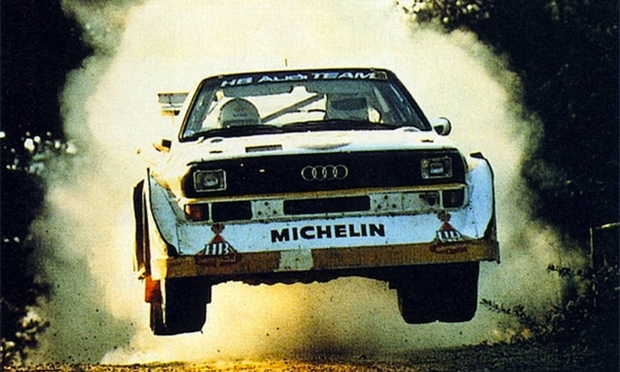
This article by Hans Erik Næss seeks to illustrate the potential of making sensory diversity a premise, rather than an afterthought, for ethnographies of sport. Based upon fieldwork at six FIA World Rally Championship events, as well as other examples from sensory studies of sport, it is argued that by exploring the sense-based experience of fans and how it shapes their view on sport, we get a broader picture of their affiliation with it.
Norwegian Elite-Level Coaches: Who Are They?

In this peer reviewed article by Kari Fasting, Mari Kristin Sisjord and Trond Svela Sand, elite-level coaches’ are studied, with the aim to get an overview of the gender distribution of Norwegian national team coaches with respect to different demographic variables, such as age, education and marital status. It turns out that only 14% of the elite-level coaches are women.
The Aristocratic Taste for Sport among Swedish Sport Researchers
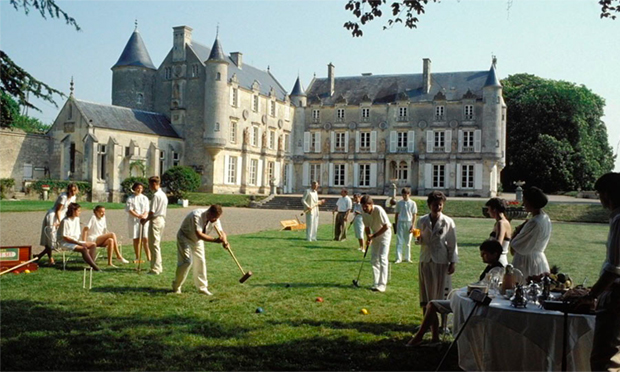
In a new peer reviewed article in Scandinavian Sport Studies Forum, Jonny Hjelm presents his penetrating study of Swedish sports scholarship within social sciences and the humanities, 1970–2010. Based on analyses of 77 doctoral theses, Hjelm concludes that the general distaste for competitive sports that is evident, is rooted in leftist anti-market sentiments as well as a glorification of the virtue of play and games.
Designing Experiences to Increase Stadium Capacity Utilisation in Football

In this new article for Scandinavian Sport Studies Forum, Sven Junghagen, Simon D. Besjakov and Anders A. Lund show in what way football clubs in smaller leagues with limited capacity utilisation can increase their per-game revenue by increasing the attendance frequency.
The Publishing Game: The dubious mission of evaluating research and measuring performance in a cross-disciplinary field

In a new peer review article in Scandinavian Sport Studies Forum, Ulrik Wagner critically examines how scientific contributions are validated and evaluated, claiming that the interplay between national performance indicators, multiple stakeholders and certain journals’ editorial practices within the sport sciences undermine peer reviewing as our core procedure to ensure high academic quality standards.
The Janus-faced relationship value of professional sports clubs: A study of Molde Football Club, Norway

New peer review article published in Scandinavian Sport Studies Forum. The authors, Harald Dolles, Hallgeir Gammelsæter, Oskar Solenes and Solveig Straume, conclude that a football club functions as a frequent reminder of the hometown for people that have migrated, and its activities serve as a foundation for conversations that might support migrators to build up social capital at their new location.
The framing of orthorexia nervosa in Swedish daily newspapers: A longitudinal qualitative content analysis

The concept of orthorexia first appeared in the late 90s and referred to a fixation on eating healthy food. Lately, however, the health fixation has been extended to include unhealthy exercise. Orthorexia is not yet a recognized diagnosis, and this article argues that when it is, it should include the eating disorder as well as the exercise disorder.
Teachers’ Learning Experiences with the Sport Education Model in Physical Education

Sport Education is proposed as an instructional model addressing concerns regarding traditional approaches to teaching physical education. Therefore, the purpose of this study was to examine the reflective accounts of cohort of in-service physical education teachers after learning about, and teaching, a season of Sport Education.