Björn Sandahl
Swedish School of Sport and Health Sciences, Stockholm

Africa and the Olympics: Winning Away from the Podium
220 pages, paperback, ill
Athens, OH: Ohio University Press 2024 (Research in International Studies)
ISBN 978-0-89680-352-7
When encountering studies of the Olympics and Olympic history one usually finds that the perspective is internal. The vantage point is from within the movement itself, and the perspective usually focuses on how the Olympic movement has engaged with or reacted to various processes and incidents occurring outside of the movement. Rarer are studies that take the opposite perspective, focusing on an external part and its relationship with the Olympic movement. Todd Clevelands Africa and the Olympics: Winning Away from the Podium is one such example. Here the object of study is the African continent and how nations and individuals from that continent have interacted with and dealt with the Olympic movement and their experiences from it.
The focus of the study is interesting in several ways. First, Africa and African sports are, at least to my knowledge, a somewhat neglected field and thus a field where the demand for more knowledge is high. Second, the achievements of African athletes have likely not gone unnoticed by anyone interested in sports and the Olympics. Therefore, it is worth noting the subheading of the book: “away from the Podium”. This is not a study of the athletes, at least not in respect of their actual achievements on the tracks and fields. This story instead focuses on the achievements outside the arenas, and the “victories” Africa has “scored” in political, ethical and other matters in relation to sports and the Olympic movement.
The main topic here is the political developments during the 1960s and 1970s and the African nations stance regarding South Africa and the apartheid legislation of 1948.
The story is told over five chapters and can be divided into two main parts where part one focuses on the African nations and their struggle to gain influence inside the Olympic movement, and part two mainly addresses individual achievements and strategies of athletes and to some extent sport officials in relation to the opportunities presented by partaking in the Olympics. The book is well researched with its sources consisting of material from the International Olympic Committee archive, the Avery Brundage collection and a vast number of newspaper and wire services as well as unpublished and published sources adding weight to the proposed arguments.
The first part, consisting of the books first three chapters, follows the story of how the African nations gains independence after the second world war and emerges on the international scene. The study starts in the 1950s and follows the formations of the African nations and the challenges presented during the final days of the colonial era and the creation of National Olympic committees as independence was gained. It then continues to follow how the African nations strived for increased influence in the International Olympic Committee. The main topic here is the political developments during the 1960s and 1970s and the African nations stance regarding South Africa and the apartheid legislation of 1948. During the three chapters the story of how African nations cooperated to diminish support for the South African regime and effectively banning it from the Olympic Games is told. The study also covers the similar challenges regarding Rhodesia and the 1976 issue of New Zeeland’s ties to South Africa, leading to the 1976 boycott of the Vancouver Olympic Games. The final part also covers the 1980s, discussing how African unity dissolved as a result of the Olympic Games of 1980 and 1984 under the pressure of the Cold War.
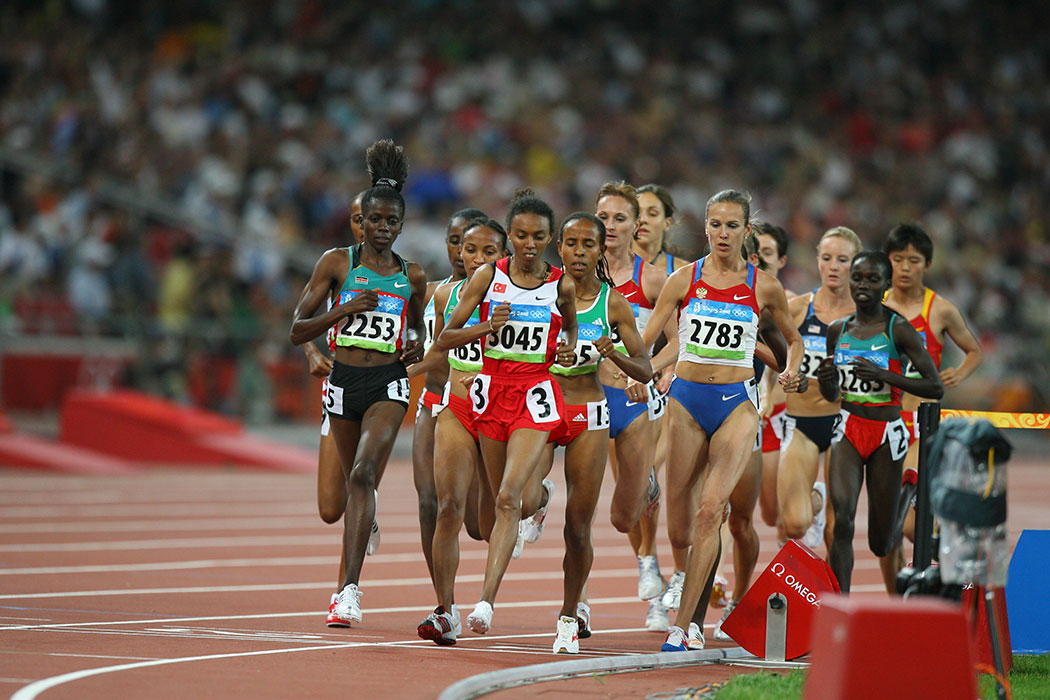
As for the second part, consisting of chapter four and five, it takes a more contemporary focus and is set on the individuals partaking in the Olympics in one way or another. The fourth chapter lets us examine how athletes with success in the Olympics return to their respective nations, creating institutions and organizations for the betterment of their respective nations. While this may not be unique to Africa, the issues raised here are highly relevant to the region; the examples are drawn from athletes who are actively involved in the fight against hunger, poverty, and a lack of education, as well as in the struggle for women’s rights within an African context. Finally, the fifth chapter addresses the strategies of the athletes themselves, with examples of nationality change, instances of defection from the homeland, and using their talent to gain opportunity to study abroad.
Notably, there is no summarizing chapter where the conclusions are presented. Instead, the introduction to the book serves this purpose which effectively means that you are served the main conclusions already in the first chapter. A curious way of inviting the reader to get to know more, though I would have enjoyed the authors final birds eye conclusions, especially in pulling together the main points from the books two parts. It should also be noted that this narrative focuses on Africa’s successes. When reading one does hint another, perhaps not so bright, story behind the lines of sport assimilation and adaptation because of Africa joining the international sports movement. But that story is for another study.
In conclusion, Africa and the Olympics: Winning away from the Podium is a breath of fresh air, giving well deserved attention to a part of sport history that, to quote the author “constitutes a patchwork of circumscribed studies dispersed across a range of fields and disciplines” (p 19). It moves the perspective from the Olympic movement itself to those knocking on the door to get in, while at the same time wanting to reform it from the inside. The book also raises questions, which should form the foundation for additional studies in the field, as good research should. In conclusion, this book sheds light on and offers new perspectives on Olympic history and is a recommended read for anyone interested in the field.
Copyright © Björn Sandahl 2026