Brian Hillman
Towson University
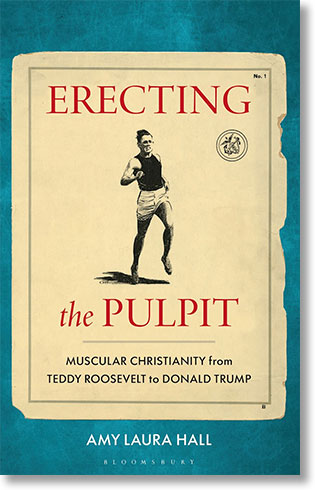
Erecting the Pulpit: Muscular Christianity from Teddy Roosevelt to Donald Trump
288 pages, hardcover
London: Bloomsbury 2026
ISBN 979-8-216-38347-5
The United States of America is often referred to as “Christian nation.” This is used descriptively, attesting to the influence of Christianity on American and, more nefariously, prescriptively, claiming that America ought to promote a distinctive Chrisitan ideal. Well over half of Americans are Chrisitan. At least a third of American Christians are Evangelical Protestants, a form of non-Catholic Christianity that is challenging to define.
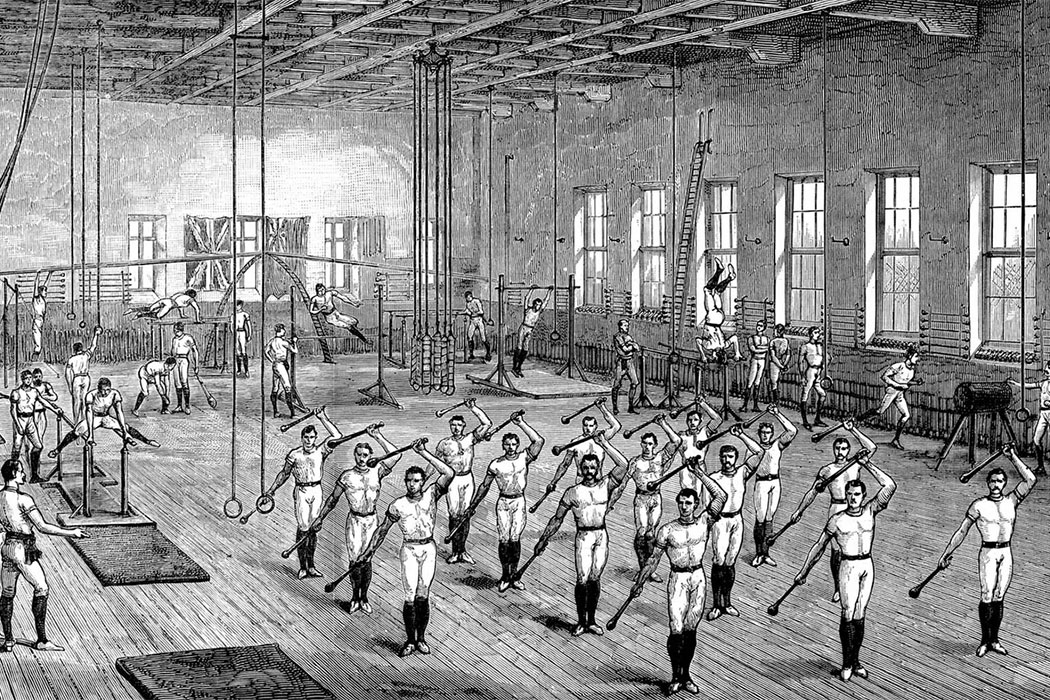
Organized sports, from amateur to professional, is perhaps the only aspect of American culture that rivals the popularity and influence of religion. One cannot appreciate the intersection of sporting culture and Christianity in American life without understanding the phenomenon called “Muscular Christianity.” Muscular Christianity began in the nineteenth century as a movement that promoted an ideal of masculinity that was disciplined both physically, partaking in regular exercise, and morally, exemplifying Christian virtue. Organizations like the Young Men’s Christian Association (YMCA) promoted Muscular Christianity and laid the groundwork for organized professional sports in America.
Academic studies of Muscular Christianity tend to focus on its legacy in sports. Just as important is its impact on American Christianity. In Erecting the Pulpit: Muscular Christianity from Teddy Roosevelt to Donald Trump, Amy Laura Hall shows the lingering impact of Muscular Christianity on contemporary American life primarily not on pitches, fields, and courts, but in pulpits and Chrisitan organizations. The book is not a dry academic monograph with a muted authorial voice. Hall’s perspective and experience is delightfully woven throughout Erecting the Pulpit. Readers should know that Hall is an associate professor of Christian ethics and gender, sexuality, and Feminist Studies at Duke Divinity School. Her experience teaching at an institution that is both a prestigious university and a United Methodist seminary is brought to bear upon Erecting the Pulpit. The book is grounded in historical and scholarly research while also being written with the verve of a curious journalist.
Muscular Christianity began in the nineteenth century as a movement that promoted an ideal of masculinity that was disciplined both physically, partaking in regular exercise, and morally, exemplifying Christian virtue.
Despite the presence of “Muscular Christianity” and the cover image of a male runner from the early twentieth century, Erecting the Pulpit focuses more on contemporary Evangelical Christian masculinity than on sports. Nonetheless, the book showcases an important legacy of Muscular Christianity.
Scholars of sport will be most interested in the introduction and the first two chapters. In the introduction, Hall describes the difficulty of defining evangelicalism, a category of Protestant Christianity that is organizationally diffuse and regionally diverse. Given the lack of a centralized organization, doctrinal coherence, or shared practice, mainstream evangelicalism is best characterized by what it likes and dislikes. Evangelicals hold a favorable attitude towards monumentally influential Reverend Billy Graham (1918-2018). In addition to promoting fitness practices, Muscular Christianity developed its own vocabulary that reflected its central concerns. Hall lists “crisis,” “leadership,” “brotherhood,” and “impact” as ideas that dominate the discourse of Muscular Christianity. These are reflected in the contemporary movements Hall explores. These concerns are part of the manufactured crisis of Christian masculinity that, as Hall shows, intersects with political and economic concerns.
Chapter one “Fitness” explores the entanglement of Muscular Christianity and Social Darwinism. It focuses on nineteenth century British writer Charles Kingsley’s work. Kinglsey’s writings for children, especially his 1862 fable The Water-Babies, encoded and promoted colonialist ideals of white Christian superiority based on Darwinian ideas of evolution. Kingsley’s 1871 “The Natural Theology of the Future” likens the Anglican Church to a garden that needs to be pruned in order to evolve in a healthy way. In America, the Darwinian-informed conception of Muscular Christianity was embraced by novelist Owen Wister and American president Theodore “Teddy” Roosevelt. Hall traces how discourses of fitness continue to be used by contemporary evangelicals as seen, for example, in Christian Century’s 2001 article “Fit for Ministry?”
“Brotherhoods,” chapter two, focuses on “Cowboy Churches,” churches that embrace the aesthetics of the idealized American West, a time in which outlaw cowboys were heroes. This image was shaped by popular media, namely the novels of Larry McMurtry, and symbolized by the Marlboro Man. Hall visits several “Cowboy Churches” like St. Joseph’s in Rowena, Texas. Although not entirely, or even primarily, attended by those who worship at a “Cowboy Church,” Hall reports on her experience attending the 2013 conference called Rewired in Davis, Oklahoma. Rewired is conference for Southern Baptist men. Hall is struck by the conference’s accounting of the crisis of masculinity, according to which watching pornography is a salient problem. Hall’s Gonzo journalism continues into chapter 3, “Sovereignty and Submission” in which she visits gatherings in the “Acts 29” network. Acts 29 refers to the New Testament “Book of Acts” which narrates the development of the early Jesus movement and contains only 28 chapters. The organization extends this ministerial legacy, functioning as the twenty-ninth chapter. Acts 29 churches, to Hall’s chagrin, harp on a similar perceived crisis of weak masculinity, with many claiming that men are sexually confused. It is perhaps noteworthy that trainer Jillian Michaels, known for cruelly hectoring contestants on the fatphobic show The Biggest Loser, is one of the few women to speak the Acts 29 conference Hall attended. Although Hall felt delighted to be a kind of female interloper at Rewired, she felt less comfortable at Acts 29 conferences or, as discussed later, her 2013 attendance at the National Prayer Breakfast. Conference rhetoric drew on discourses of warfare in which men are “deployed.”
The movement also produces celebrities including pastor Rob Bell. In a 2014 O, The Oprah Magazine profile, Bell is featured shirtless, photographed from below in what Hall calls a “crotch shot.” This masculine, if not homo-erotic aesthetic promotes figures like Bell as a Muscular Christian icon and, Hall observes, is often the camera angle in which speakers are featured on jumbotrons at large conferences.
In the sprawling fourth chapter, “Mill Town Cathedrals,” Hall traces how wealthy institutions shaped American Christianity. The chapter, more than others, lacks a coherent organizing principle. However, its discussions, such as the fondness the late poet Wendell Berry and journalist Bill Moyers have for rural American life, were engaging. Chapter five “Leadership,” discusses the National Prayer Breakfast, an annual event held in Washington, D.C. in which prominent figures meet for several days, ostensibly united by a concern for Christianity. Hall discusses the controversial origins of the National Prayer Breakfast as discussed in several works by journalist Jeff Sharlet. The National Prayer Breakfast was created by a secretive organization called “The Family” whose “dirty laundry” it tried to keep from becoming public knowledge. This chapter also discusses how evangelical institutions tried to gain a foothold in higher education. Hall herself was an applicant for the “Alonzo I. McDonald Family Professor of Evangelical Theological Studies” at Harvard Divinity school in 2006. It was clear to Hall that the donors had a particular vision for the chair, one that included a commitment to evangelicalism, although Harvard successfully hired a scholar (David N. Hempton) on his merits as a historian of evangelicalism. The same foundation successfully opened a center at the University of Oxford in the UK which, subsequently promoted a project led by scholar Nigel Biggar on “Ethics and Empire.” Although implicit in the book, this is a “full circle” moment in which Muscular Christianity returns to support the project of empire building.
The book contains some idiosyncratic features that inform the reading experience. Some of the connections, even within a given chapter, are associative rather than clearly described. Although the book’s chapters are roughly arranged chronologically, sections often flit between different periods in the past.
Some readers may puzzle over how the book’s discussions hang together as Erecting the Pulpit does not advance a sustained thesis. It is best read as a thematic study, drawing the reader into phenomena that are, in some ways, eerily familial and, in others, strange, if not troubling. In introducing a term, Hall regularly relies upon the Oxford English Dictionary definition of the term. Although this strategy supplies the reader with a thorough definition of a term, it often reads as stilted and clinical, a stark contrast with Hall’s carefully observed travels and personal anecdotes.
Erecting the Pulpit expands the study of Muscular Christianity beyond the institutionalization of organized sports. It shows the political relevance of a movement that merged physical culture with religion. For non-Americans and those with limited knowledge of contemporary American culture, the book provides a stellar introduction to contemporary evangelicalism, including its norms regarding masculinity. It also shows the malleability of sports and religion, as seen in its shining study of the “Cowboy Church” movement. Erecting the Pulpit is a shining example of an academic book in which the author’s curiosity sets the terms and delivers engaging results.
Copyright © Brian Hillman 2026