Łukasz Muniowski
University of Szczecin, Poland

The Power and the Glory: The History of the World Cup
576 pages, hardcover
New York, NY: Bold Types Books 2025
ISBN 978-1-64503-040-9
Few sports journalists, regardless of the discipline they cover, are as revered as Jonathan Wilson. His books on English, Argentinian, Spanish and Hungarian football have solidified his reputation as a writer whose meticulous research and a good eye/ear for an anecdote allow the reader to assume with utmost certainty that the book they are holding in hands will be a pleasurable and informative read. That’s the case with The Power and the Glory: The History of the World Cup, a 600-page mammoth of a book, which spans for almost a century, from 1930 until 2022, and is punctuated by chapters devoted to each tournament.
Its structure is not without (small) flaws, as some tournaments required restrictive selectiveness, since there was a lot going on – on and off the field – while in others Wilson reaches beyond the competition to find something attention-worthy. The chapters don’t offer a detailed discussion of individual World Cups, filled with statistics and dates. Rather, they are a collection of individual narratives, life-stories and political developments which shaped the perception of a given tournament. While I understand the process, I nevertheless regret that the author doesn’t even mention such colorful characters as Jorge Campos or Jose Luis Chilavert.
Case in point, former president of CONMEBOL Nicolás Leoz, who “demanded a knighthood, an invitation to the wedding of Prince William and Kate Middleton and that the FA Cup be named after him” (p. 477) for his vote for England’s 2018 bid.
Wilson points out that the last two World Cups, in Russia and Qatar, have been unfairly discussed as the downfall of FIFA, an organization so corrupt and overtly political that it’s a wonder that it continues to exist, avoiding any serious repercussions. The issues generated by both tournaments – sportswashing, human rights violations – have been in existence since the inception of the organization and the global competition to determine which nation produced the best football players. Even before the first World Cup took place, football was undergoing heavy criticism, because of it being regarded as “a useful preparation for war, or at least the rigours of overseas service” (p. 8). While intellectuals saw it as that, the rulers, dictators in particular, recognized its military potential and used the competition to achieve their means without (or with less) bloodshed. This applied just as much to the World Cup played in 1934 in Italy, 1978 in Argentina, and 2022 in Qatar. Mussolini awarding the winners with Coppa del Duce is not that different from Sheikh Tamim bin Hamad Al Thani putting a bisht on Leo Messi – both were political gestures that had nothing to do with sports.
Members of the FIFA Organizing Committee also overlook the lofty values carried by their discipline, and their demands sometimes not so much border on absurd as are completely unreal. Case in point, former president of CONMEBOL Nicolás Leoz, who “demanded a knighthood, an invitation to the wedding of Prince William and Kate Middleton and that the FA Cup be named after him” (p. 477) for his vote for England’s 2018 bid. The entitlement of the “suits” is striking in almost every instance it’s mentioned by Wilson, and it’s mentioned time and time again. FIFA-funded movie United Passions (2014) painted João Havelange as the villain and Sepp Blatter as the hero, the goodhearted president who inherited a flawed organization and was doing his best to turn it into a tool instilling world peace. Wilson though proves that Blatter’s motivation to organize the tournaments around the world – his influence on staging the contest in Africa and Asia for the first time is undeniable – was to receive the Nobel Peace Prize. It’s a shame then that the FIFA Peace Prize didn’t exist until 2025, but maybe Blatter will be a future recipient.
Subsidies, gifts and bribes were always a part of the process, as Uruguay won the bid to host the initial tournament by promising to reimburse the competitors’ costs of travel and agreed to establish a group stage, so that the European teams wouldn’t be fretting about going home after a single game. As for the benefits of organizing the cup, they are mostly symbolical, as FIFA demands infrastructure and availability of various modes of transportation, leaving countries on their own once the tournament is over. There’s no better example of something expected from FIFA for the tournament and rendered basically useless afterwards than the $550 million Mané Garrincha Stadium in Brasília, which is now used as bus storage.
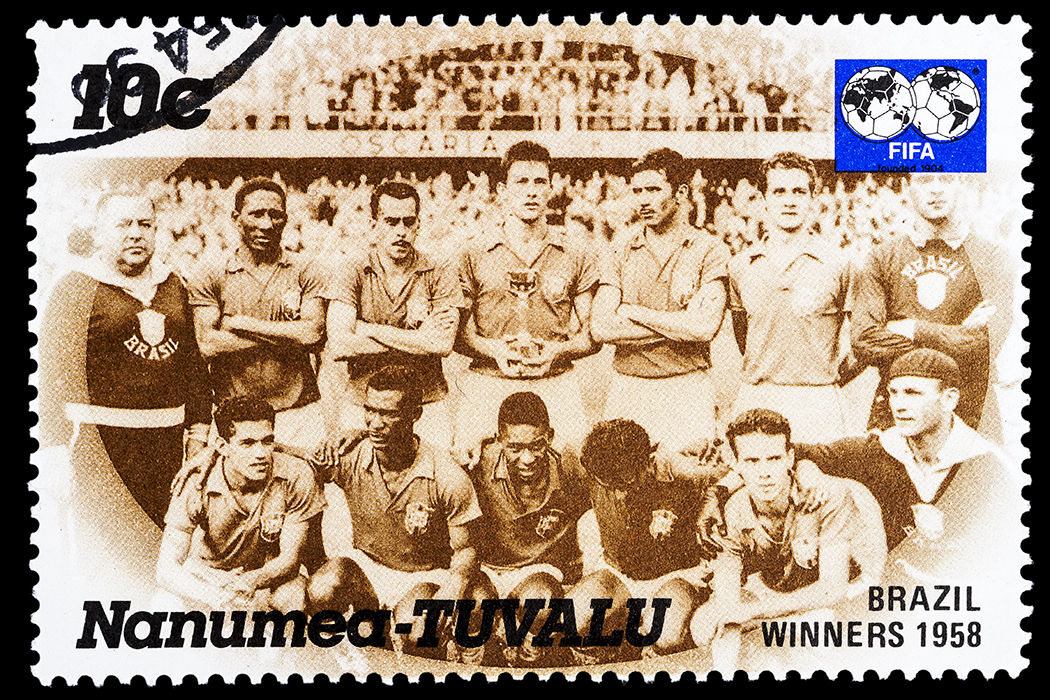
The tournaments always relied on stars and if those didn’t arrive as advertised, they generated new ones. Wilson masterfully summarizes the sporting biographies of World Cup’s leading men, from Uruguay’s José Leandro Andrade to mythical tricksters like the Brazilian malandro and Argentinian el pibe, who came to life in the figures of Pelé and Maradona, respectively. In 1924 Andrade became the first Black footballer at the Olympics. Extremely talented and carrying an exotic aura around him, he became an instant celebrity in early 20th century Paris. As for the other two, they were both awaited as saviors of their countries and cultures, with Pelé allowing Brazil to put Maracanazo – the defeat to Uruguay in the World Cup final on their own turf – behind them, and Maradona allowing his country to celebrate triumph which wasn’t tainted like the 1978 win, during a tournament organized by the Argentine authoritarian military junta government.
Albeit requiring some prior knowledge of the competition before reading, The Power and the Glory is one of Wilson’s finest achievements yet, as it allows him to paint simple, yet complex pictures of nations, federations and players. Decades of research culminate in a work that should impress even the most knowledgeable football fanatics.
Copyright © Łukasz Muniowski 2026