Richard Jones
Director of Journalism, Politics and Contemporary History, University of Salford

The BBC has announced the end of one of its longest-running programmes, Football Focus. It’s been a fixture of Saturday lunchtimes since 1974. But the final whistle will blow when this season finishes. The BBC has blamed a decline in audience for the BBC One broadcast as fans now get their pre-match news and views from a wider range of sources.
This isn’t a sign that the BBC is moving away from football. Research in my forthcoming book Sports Journalism in the UK, shows that 60% of the content on the BBC Sport X account is now about football, compared to 39% in its traditional sports bulletins on Radio 5 Live.
The BBC is also transforming its previously cautious approach to YouTube, with new video-first sports podcasts and channels, as it seeks to meet younger audiences on their favourite platforms. The old Football Focus slot will be going to Kelly Somers’ The Football Interview, a more in-depth weekly conversation on iPlayer that you’re already as likely to watch on your phone as the TV.
Another venerable BBC football programme, Match of the Day, suffered a similar drop in ratings in its traditional Saturday night slot. The BBC responded by making its valuable clips of Premier League highlights available online earlier. But one effect of the expansion of the Match of the Day brand has been to make Football Focus a less visible part of the BBC’s extensive football coverage.
Some online commentary has blamed declining ratings on a so-called “woke” takeover of Football Focus, pointing to the appointment in 2021 of its first regular female host Alex Scott and the introduction of more items about women’s football. Some male critics have argued the BBC is part of a conspiracy to give the women’s game a prominence it doesn’t deserve.
Yet the BBC and others have argued that women’s football drives audiences and engagement. The public broadcaster’s coverage of women’s football has been rewarded with rising viewing figures of England’s success at major tournaments. In the year to 2024, the government’s participation survey found women’s football was the second most watched sport on British television, behind only men’s football.
In the era of pay TV networks, which outbid terrestrial broadcasters for the rights to many of the major sports leagues, tournaments and events, sport tended to be pushed to the margins of free-to-air television, relegated to weekend afternoons and nighttime highlights. But this is not to say it is not still an important part of the free-to-air offer: by 2024, the BBC, ITV, Channel 4 and Channel 5, spent £700 million between them on sport, more than any other genre of new, original programming. Yet it is live sport, not related shows such as Football Focus, which we’re mainly tuning in for.
The BBC faces a difficult broader context. It is under pressure to limit spending and BBC Sport is no exception. The BBC is not showing this summer’s Commonwealth Games live from Glasgow on television, a decision that would have been unthinkable in the past. All broadcasters now regularly have their commentators sitting in studios or at home describing the action from television pictures, to cut production costs.
The legacy of Football Focus
While it may now look like a holdover from a bygone age, Football Focus will go down as an important programme in British sports media history. An earlier version, Football Preview, began in September 1967 as part of the BBC’s old multi-sport magazine show, Grandstand. It was an innovative development, bringing regular football discussion and analysis from the pages of newspapers onto the screen.
Extended and relaunched seven years later with host Bob Wilson, Football Focus was often directly up against ITV rivals On The Ball (1965-1985, then 1998-2004) and Saint & Greavsie (1985-1992). These shows helped pioneer the now familiar diet of football previews, interviews and punditry. Each enjoyed the sort of pre-match access to players and managers now often restricted by clubs and leagues keen to keep their best material for themselves.
When the BBC briefly lost the rights to Premier League highlights in 2001, both Football Focus and results show Final Score were spun out as separate programmes to help maintain the prominence of football on the BBC. It worked: Football Focus lasted almost two decades after its mothership Grandstand finally came off the air in 2007. The falling number of top flight 3pm kick offs certainly didn’t help though, and that trend might in time make it harder for even Final Score to endure, too.
Intense competition in a sport environment saturated by media, meant Football Focus struggled to remain distinctive. Fans can now get everything from detailed tactical analysis to outrageous hot takes from content creators large and small. These offer the sort of depth and partisan approach the BBC, constrained by limitations of time, resources and objectivity, cannot.
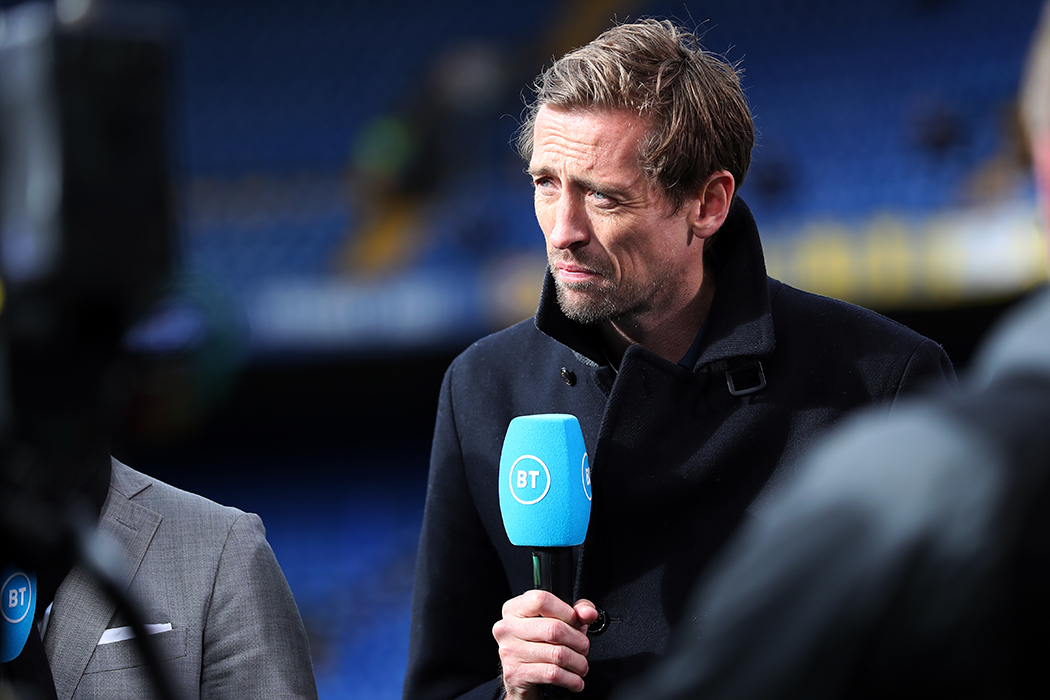
Ghosts of the past have come back to haunt the BBC. That Peter Crouch Podcast, launched by the BBC, is the UK’s most popular football podcast, according to Edison Research. The only problem is that it’s been on commercial platform Acast since 2022. Meanwhile, ex-Football Focus host Gary Lineker’s Goalhanger stable includes three of the UK’s top six podcasts overall, including his own The Rest is Football, coming soon to Netflix.
Then there’s the sometime Dragon’s Den star, Gary Neville. The footballer turned entrepreneur recently signed Mark Goldbridge to his expanding media network, The Overlap. As the face of YouTube channel The United Stand, Goldbridge has become arguably the most successful exponent yet of fan media, delivering unfiltered opinions on Manchester United from his home studio rather than the stadium. In true football transfer style, the deal was for an “undisclosed” fee.
All this adds up to a much busier football media market than the one Football Focus first entered. BBC Sport’s focus remains on football, perhaps increasingly so. But on Saturday lunchtimes at least, it’s going to be taking a different form.
This article is republished from The Conversation under a Creative Commons license. Read the original article.