Emma Wulff Ginnerup, Stian Røsten & Anne Tjønndal
Nord University
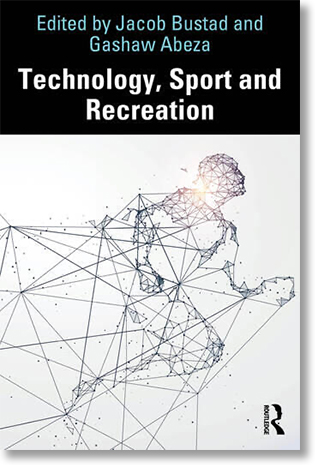
Technology, Sport and Recreation
252 pages, paperback
Abingdon, Oxon: Routledge 2026
ISBN 978-1-03-296180-4
Technology, Sport and Recreation brings together 14 chapters which collectively aim to critically examine the transformative intersection of technology with sport and recreation. The book is edited by Jacob Bustad and Gashaw Abeza who are both Associate Professors at Towson University, USA. The book aims to engage a wide range of readers, including sport and recreation professionals, policymakers, academics and students in sport management.
The book sets out from the sensible premise that technological innovation continually ‘shapes the contemporary landscape of sport and recreation’ (p. 8). In that regard, one of its clear strengths lies in how the individual chapters collectively map this academic terrain. Readers are introduced and guided across a varied landscape of this transformative relationship, moving between different elevations (e.g., professional and amateur sports) and features (e.g., artificial intelligence, big data), with analyses ranging from specific technologies such as wearables in Chapter 2, to the development of “new” sports like esports in Chapter 7, and the organization of sporting events in Chapter 12. However, and as we will return to, the book only partially delivers its promise to ‘critically’ examine the constitutive relationship between technology and sport and recreation. What the book overall lacks in critical sharpness, it compensates for by emphasizing the numerous benefits, or at least the promises, of technological innovation in sport. These include enhanced individual performance and health, stronger community connections, and contributions to broader sustainability and societal goals (p. 242), among other things.
Although these “issues” are relevant and real, a more nuanced discussion of broader implications would have strengthened the chapter, such as the blurring boundaries between the “technological” and the “human” (for example, drawing on Haraway’s notion of the cyborg), as well as questions related to digital divides, inequality, data ownership.
As readers, we are of course shaped by our own understandings and research interests. Our work also draws on a critical perspective, not in the sense that we deny the benefits and opportunities of technological innovation, just as medical research on disease does not deny the existence of good health, but in the sense that we tend to expect a more probing analytical focus on the often-unintended consequences of novel technologies in sport. Our assessment is therefore shaped by an expectation that such critical engagement would be more consistently present.
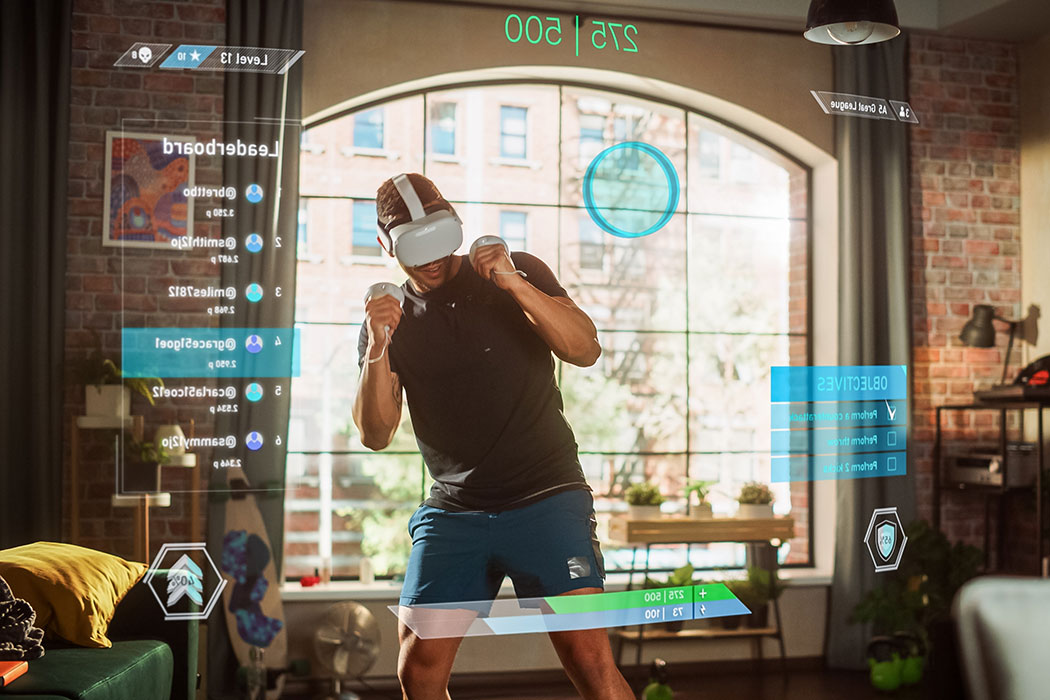
Chapter 6 on AR and VR technologies illustrates this tension. It shows how these technologies create new ways for athletes to train by, for example, creating contexts that ‘mimic real-world scenarios’ (p. 88) to improve decision-making, and transform sport broadcasting by, for example, introducing ‘animated scoreboards and cartoon-like interfaces to appeal to younger audiences’ (p. 90). Yet the discussion of ‘current issues’ remains limited, largely restricted to concerns about ‘cost’, ‘accessibility’, and the challenge of ‘finding the best fit’ (p. 95–96). Although these “issues” are relevant and real, a more nuanced discussion of broader implications would have strengthened the chapter, such as the blurring boundaries between the “technological” and the “human” (for example, drawing on Haraway’s notion of the cyborg), as well as questions related to digital divides, inequality, data ownership.
That said, there are notable highlights across the book’s roughly 240 pages. Chapter 4 on ‘Sports Analytics and Data-Driven Performance’ particularly stands out. In contrast to several of the more descriptive and theoretically “thin” chapters, this one situates the ubiquitous and growing reliance on data in connection with the twenty-first century emphasis on ‘neoliberal’ subjects who are increasingly expected to ‘be responsible for themselves and their futures’ (p. 46) and are consequently ‘encouraged to internalize quantified’ metrics as indicators of their value and productivity (p. 49). While the chapter primarily focuses on professional sport in an American context, it also demonstrates how this “data-driven logic” extends into recreational and youth sport. As the chapter’s author, Baerg, for example, notes, ‘using a Garmin Edge cycling computer together with the Connect platform to track variables such as heart rate, cadence, and power output’ has become common practice among casual cyclists (p. 47).
More importantly, Baerg raises a number of critical questions. These include concerns about athletes’ ‘humanity’ and potential ‘dehumanization’, ethical and legal issues related to privacy and data ownership and usage, ‘whether athletes should be compensated for the data they produce’, and the expansion of ‘surveillance’ practices affecting both athletes on and off the field, as well as spectators in the stadiums (p. 50–52). In other words, this chapter delivers on the book’s aim and “promise”. Another highlight in the book is that several chapters introduce and draw extensively on previous research from a variety of disciplines within the sport sciences. Hence, readers with limited knowledge of technological innovation in sport will get good insights into current research on the topic.
Generally, we do miss a more critical perspective throughout the book. As mentioned above, the chapter 4 on ‘Sports Analytics and Data-Driven Performance’ shows this level of critical analysis, that we find lacking in many of the other chapters. Especially, more social and cultural aspects of sports technology use could be included in several chapters.
Furthermore, the book also describes that it is drawn from empirical research, but we likewise find this lacking. The book includes some empirical research, in the subsection Practice in Action, but in many cases, this is limited to practical examples of how sports technologies are being used in different contexts. For example, chapter 6, “Virtual reality and augmented reality in sport”, use parts of an interview section with a sport director to gain deeper insight of the use of VR and AR technologies. However, this interview is not further analysed. From our point of view, this is a missed opportunity. Furthermore, chapter 10 and 12 include examples of how technologies are used, in these cases the Reddit’s subdreddits dedicated to Sport, SoFi Stadium technology and the Los Angeles Rams. Even though these examples can help get an understanding of how, and why these technologies are being used, the authors do not connect the practical example with theory or frameworks, and do not engage in a critical analysis of these technologies.
The introduction of the Technology-Sport-Recreation Framework is ambitious and interesting. The book is built upon this framework, and it’s supposed to bind all the chapters together. It would have strengthened the book if this framework was developed further, for instance by integrating it in all chapters. The framework is mentioned again in the last chapter (p. 237) but doesn’t help in providing this common thread it’s trying to deliver. Additionally, some of the chapters also overlap, for example when it comes to definition of AI and wearables. This contributes to making some of the chapters a bit repetitive.
Copyright @ Emma Wulff Ginnerup, Stian Røsten & Anne Tjønndal 2026