Dilwyn Porter
International Centre for Sports History and Culture, De Montfort University
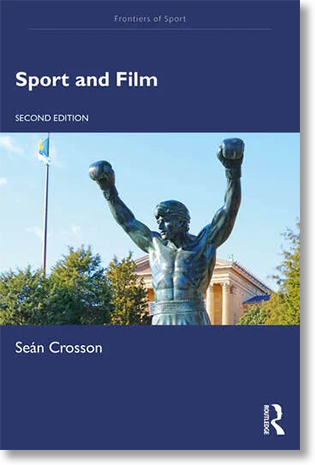
Sport and Film: Second Edition
286 pages, paperback, ill
Abingdon, Oxon: Routledge 2026 (Frontiers of Sport)
ISBN 9781-03-229480-3
Second editions often escape critical attention, but this edition of Seán Crosson’s Sport and Film demands serious consideration. It offers a significant update, not only in terms of what has been written about sport and film since the book was first published in 2013, but also because it addresses the arrival of digital cinematography and the way in which this has impacted on sport cinema, notably by enabling filmmakers to bring enhanced photo-realism to the depiction of sporting action. In addition, Sport and Film (2026) embraces significant new content. Crosson’s original chapter on ‘The Sports Film, National Culture, and Identity’ has been expanded to incorporate a new section on Russia and a whole chapter is now devoted to cinematic sports documentaries. The book now concludes with an insightful essay on the American sports film and contemporary US politics. It also includes some new presentational features designed to enhance its utility for teachers and learners.
Sport and the cinema have been engaged in an ongoing symbiotic relationship since the end of the nineteenth century. As cultural practices deeply rooted in modernity both have retained their popularity, though the advent of digital technologies and the proliferation of on-demand streaming platforms have changed the ways in which we access both sport and sports film. There were from the start, as Crosson suggests, ‘obvious attractions to sport that would seem at face value to make it the ideal subject for film’ (p. 3). It appealed to filmmakers on account of its dramatic potential but also as a source of stories, predominantly utopian narratives in which improbable successes were achieved despite manifest structural disadvantages relating to class, gender or race. Thus, in Hollywood, films with sporting themes have generally served to underpin a version of the American dream in which winning against the odds is always a possibility. This theme runs through Sport and Film, most powerfully where Crosson examines the appeal of NASCAR-related Talladega Nights: the Ballad of Ricky Bobby (2006), where he who wins the stock-car race takes all and losers are just … losers. As Crosson rather bleakly concludes, ‘for many of those who stormed the Capitol in January 2020, Talladega Nights provides a reassuring picture of race and gender relations that chimes with their own underlying beliefs’ (p. 256).
In Match (2012), a reworking of the Second World War soccer ‘death match’ story, Nazi collaborators speak Ukrainian while Soviet patriots use the Russian language, thus aligning the film perfectly with Putin’s insistence that Russia’s Ukraine policy is an exercise in denazification.
Inevitably, the predominance of the US film industry in terms of production and worldwide distribution is reflected in the content of this volume. An updated Chapter Six, which addresses the relationship between sports film and national identity, helps to balance and widen the scope of discussion and is thus especially welcome. Case studies of British, Australian, Indian and Russian sports cinema add depth and variety and this reader’s only regret is that the author did not take the opportunity to add Ireland to this list, Crosson’s Gaelic Games on Film (2019) being the go-to publication in that field. Some astringent observations on Russia more than compensate. Russian state patriotism is routinely promoted and sports films – often blatantly – serve the narrow interests of the current regime. In Match (2012), a reworking of the Second World War soccer ‘death match’ story, Nazi collaborators speak Ukrainian while Soviet patriots use the Russian language, thus aligning the film perfectly with Putin’s insistence that Russia’s Ukraine policy is an exercise in denazification. Crosson’s reading of Going Vertical (2017), a representation of the famous Olympic men’s basketball final of 1972 when the Soviet Union defeated the USA, is particularly important here. Conflicting national identities – Russian and non-Russian – are subsumed in teamwork for the benefit of all. Propagandists of the Soviet era could not have conveyed the message more clearly.
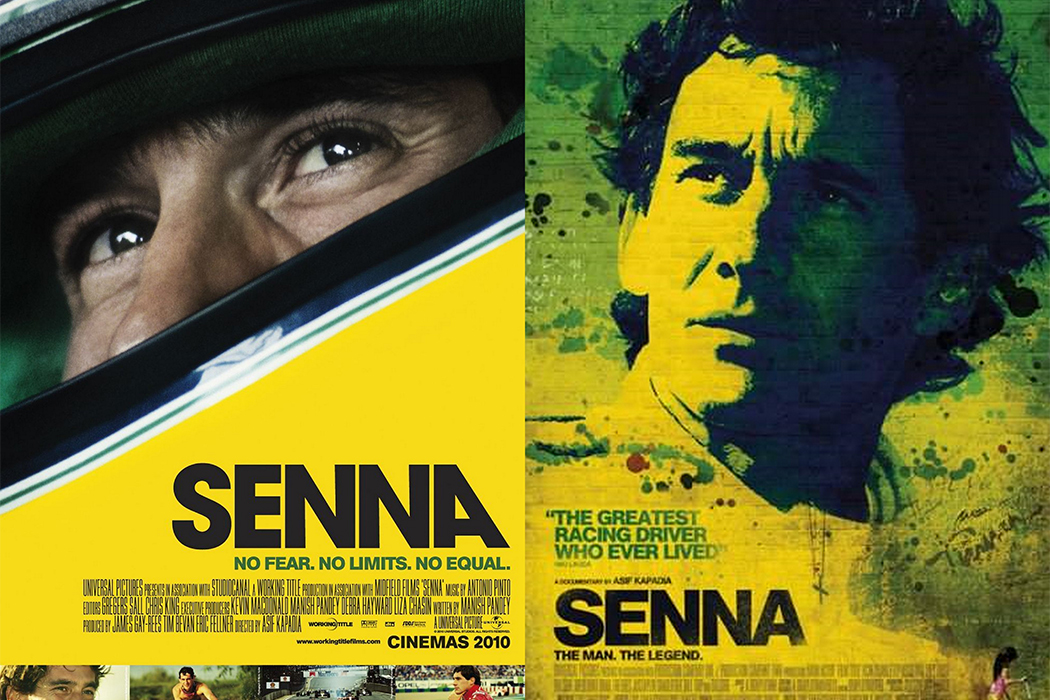
The author has chosen to devote a new chapter to the ubiquitous sports documentary film, widely accessible via television and on-demand streaming schedules, though the focus here is on primarily sports documentaries made for the cinema. Perhaps, we will have to wait for a third edition before the wider agenda is addressed. As it stands the discussion ranges from Leni Riefenstalh’s Olympia (1938), ideologically suspect but technically brilliant, to Asif Kapadia’s Senna (2010), categorized as ‘an individualist tale of achievement, largely to the exclusion of social and historical context’, which utilises ‘the familiar three-act structure found in mainstream fiction film’ (p. 240). Crosson highlights a relatively recent movement away from education towards entertainment which effectively undermines long-held conventions regarding the serious purpose of documentaries and prioritizes filmmaking focused on individuals, plucky outsiders preferred, who dream the dream and make it happen. ‘The contemporary cinematic sports documentary’, he argues, ‘exploits the dramatic possibilities of found footage or renderings of social reality to produce engaging and entertaining narratives that elevate the individual while eliding the historical and social context concerned’ (p. 244). The audience, it might be said, is encouraged simply to ‘dream on’. A similar conclusion is drawn from the mountaineering film Free Solo (2018).
It seemed important in reviewing this second edition of Sport and Film to concentrate primarily on those aspects of the book that differ from the first edition. For those approaching film from a Sports Studies perspective, the utility of the original is unimpaired. Crosson continues to provide useful instruction in how we might read film and demystifies the technical language of the cinema so that we might use it with some confidence. As a reader, I found the boxes headed ‘Preview’, ‘Objectives’ and ‘Key Terms Defined’, which now feature in every chapter, along with the insertion of boxed paragraphs of key text, distracting rather than helpful. Similarly, I would have preferred that ‘Questions’ and ‘Practical Projects’ were in a separate section at the end of the book rather than at the end of each chapter. Other readers will have good reasons to differ, and I would not want to end this review on anything but a positive note. Sport and Film, in its new manifestation, continues to serve a very useful purpose. It supplies the critical tools that readers require to navigate their way successfully through the seductive world of photo-realism which we encounter daily.
Copyright © Dilwyn Porter 2026