Łukasz Muniowski
University of Szczecin, Poland
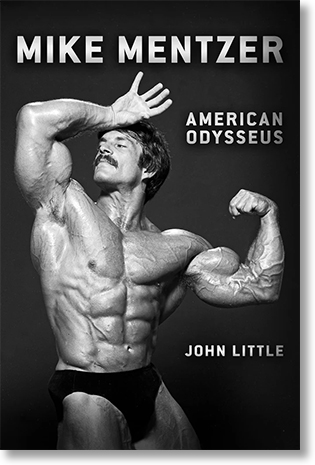
Mike Mentzer: American Odysseus
552 pages, paperback
Toronto, ON: ECW 2026
ISBN 978-1-77041-784-7
When fitness influencer Mike Israetel issued a statement that he was not only “bigger and stronger,” but also “more educated” than Mike Mentzer, the bodybuilding world erupted. His words were probably intended to provide a catchy soundbite, but have been used to further ridicule Israetel, after the mistakes in his PhD thesis were pointed out and exposed by Salomon Nelson. Not without merit, Israetel picked Mentzer as the target of his attack, as his training methods stand in opposition to what the bodybuilder and coach practiced and preached. While Israetel talks about reps in reserve, Mentzer was the paragon of training until failure, one set exercises, and not shying away from negative and forced repetitions.
What is more, Mentzer is, dependent on one’s stance, bodybuilding’s icon or whipping boy. He was never the one to go with the flow and called things as they were (or what he believed them to be), for which he was cast out by mainstream bodybuilding media, but not by bodybuilders themselves, who gladly took his advice and coaching. Dorian Yates, the six-time Mr. Olympia, worked out under Mentzer and according to his guidelines, and his achievements serve as ultimate proof of Mentzer’s philosophy. Therefore, it is understandable why Yates was among the first to defend his legacy when modern-day lifters targeted him.
Mentzer did not fit the mold of a typical juicehead. Instead, he was an avid reader and freethinker, who utilized available information to achieve desired results.
As proven by John Little, Mentzer’s philosophy went beyond bodybuilding – he was a strong believer in Ayn Rand’s Objectivism. Mentzer was led to it by years of marching to the beat to his own drum, for better or for worse sticking to his principles. It is therefore understandable why rejecting conformity and compromise appealed to him, and Mentzer could be characterized as bodybuilding’s version of Howard Roark. Just as the protagonist of Rand’s The Fountainhead, he challenged the establishment, here represented by brothers Joe and Ben Weider, as well as Arnold Schwarzenegger. Little takes down the three bodybuilding icons, exposing the machinations involved in creating and preserving Schwarzenegger’s legacy by Weider’s magazines and the highest governing body in bodybuilding, the IFBB. Mentzer was not the only one who suffered because of this coalition, as fellow bodybuilders Sergio Oliva and Chris Dickerson had valid reasons to consider themselves robbed by the three in one way or the other. Yes, judging in bodybuilding competitions is subjective, yet Little makes a compelling argument that the field was rigged whenever Schwarzenegger had a stake in the game.
As in every good story, American Odysseus has a clear antagonist, and here that part is played by Schwarzenegger, who Little paints as a ruthless egotist, having no second thoughts about sacrificing others for personal gain. While Schwarzenegger never made a secret of fabricating elements of his life story and some of his morally dubious acts are now common knowledge – like when he revealed to the judges in 1982 that Tom Platz tore his bicep – it is still surprising how much he got away with because of his stature. Apart from the devotion to bodybuilding, Schwarzenegger also adhered to Objectivist principles, even though he never explicitly admitted it. He is so compelling as a villain because of how similar philosophically – individualism, self-interest as morality – he is to the hero.
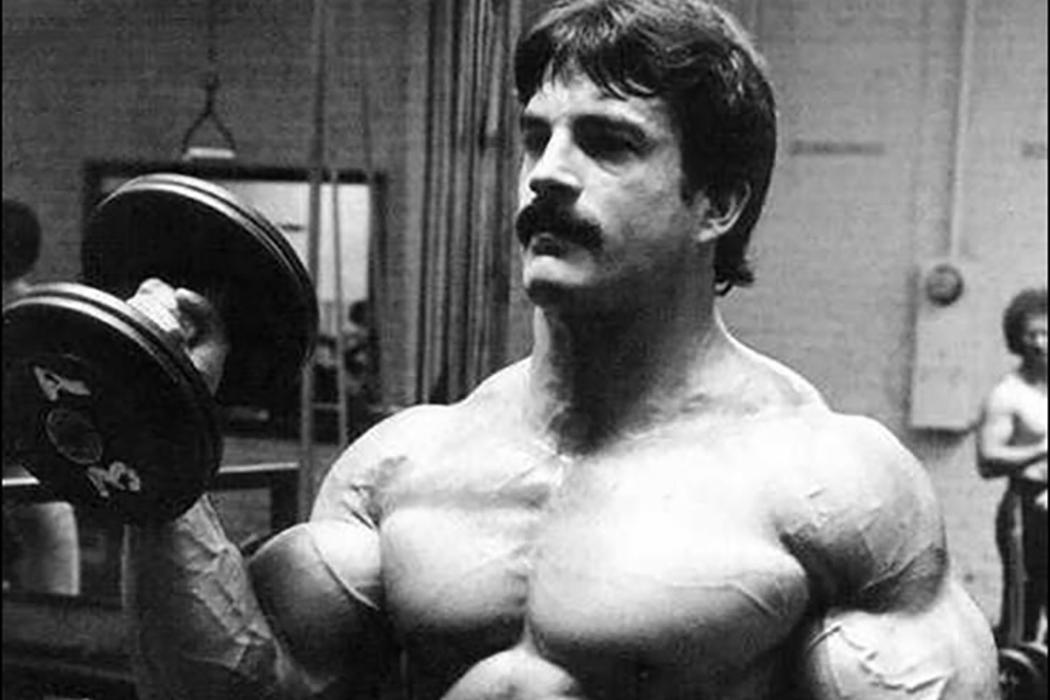
Mentzer did not fit the mold of a typical juicehead. Instead, he was an avid reader and freethinker, who utilized available information to achieve desired results. This is what endeared him to the author (personally, his friend) but also to future generations of bodybuilders who make use of his knowledge and incorporate his findings into their workouts. What made Mentzer’s training methods so revolutionary in the 1970s and 1980s? Instead of hour-long sessions with barbells, he opted for 20–45-minute workouts using the Nautilus machine. Because bodybuilding magazines owned by Joe Weider sold training programs using free weights, Mentzer was asked to promote them when writing for the “Master Blaster” (as Weider was known). Weider wanted Mentzer to praise him and credit the publisher with his success. His unwillingness to do so made him an outcast in the industry and heavily contributed to his depression.
This was not the only mental health issue that Mentzer had to face, as he also tended to be paranoic and suffered from psychotic, schizophrenic episodes, ignited by his use of amphetamines and, later, painkillers. Little describes those in detail, revealing just how severe the problems faced by Mentzer were. His post-bodybuilding life was complicated to say the least and makes for an emotional read. It is extraordinary how this once glorious athlete lost everything, even experienced homelessness, but it is even more impressive how he was able to build himself back up as a personal trainer. That is until his body gave up on him, providing a premature end to an extraordinary life.
Mike Mentzer: American Odysseus is an attempt at righting the wrongs that impacted Mike Mentzer – the human being, while upholding his mythical status in the bodybuilding world. Credit is due to the author for finding the perfect balance between the two, thanks to which the book is not a simple hagiography or a thing for bodybuilding fans, but a story about an actual person, who lived, sweated and suffered while trying to achieve perfection in his craft. This is something that every reader can relate to, regardless of their vocation. Mentzer’s story is also a reminder for academic readers to always consider the human factor, as things happening behind the scenes are of equal importance as indicators, variables and stats.
Copyright © Łukasz Muniowski 2026