Lisen Lehman1 & Andreas Fröberg2
1 The National Agency for Special Needs Education and Schools;
2 Department of Food and Nutrition, and Sport Science, University of Gothenburg
 Including students with visual impairment in physical education requires teachers to navigate tensions between individual needs, whole-group participation, and organisational constraints. This study aimed to explore how physical education teachers describe their professional scope for action and perceived self-efficacy in creating inclusive teaching for students with visual impairment. Data were collected through semi-structured interviews with five teachers and a web-based survey completed by 20 teachers. Interview data were analysed thematically, while survey responses were analysed descriptively. The findings show that teachers regard inclusion as an integral part of their professional responsibility and employ various adaptations to facilitate participation. However, adaptations may also risk reinforcing differences or separating students from shared learning activities. Although teachers generally perceive considerable pedagogical freedom, their opportunities to create inclusive teaching are constrained by group size, facilities, limited planning time, and access to relevant competence and support. Teachers also express greater confidence in making practical adaptations than in justifying adaptations and assessment decisions in relation to curriculum requirements. Drawing on compensatory, relational, and dilemma perspectives on special education, the study highlights that inclusion involves more than individual adaptations or physical presence. Meaningful participation requires critical reflection on subject-specific norms, teaching practices, and opportunities for students to demonstrate knowledge and competence. The findings emphasise that inclusive physical education is both a pedagogical and an organisational responsibility, requiring proactive planning, professional support, and flexible approaches to participation and learning.
 Download the article here!
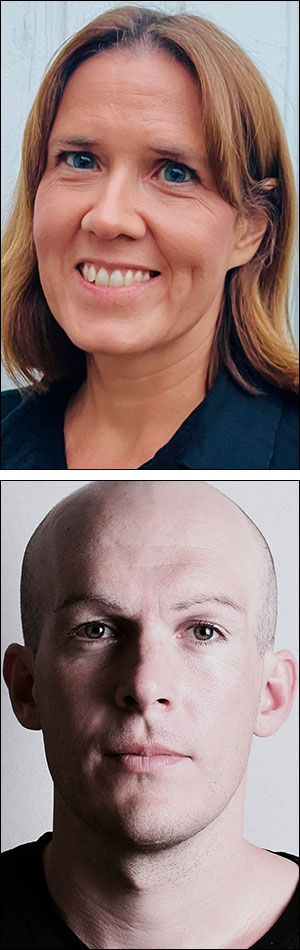
LISEN LEHMAN is a qualified special education teacher specializing in visual impairment and holds a Master’s degree in Didactics with a focus on Physical Education and Health. She currently works as an advisor at the Swedish National Agency for Special Needs Education and Schools (SPSM), Resource Centre for Visual Impairment, where she provides guidance and support to Physical Education and Health teachers who teach pupils with visual impairments.
ANDREAS FRÖBERG is an Associate Professor in Sport Science and is currently employed as a senior lecturer at the Department of Food and Nutrition, and Sport Science, University of Gothenburg. Andreas is a certified Physical Education and Health teacher and teaches at the Physical Education and Health teacher education programme.
Read more on idrottsforum.org about