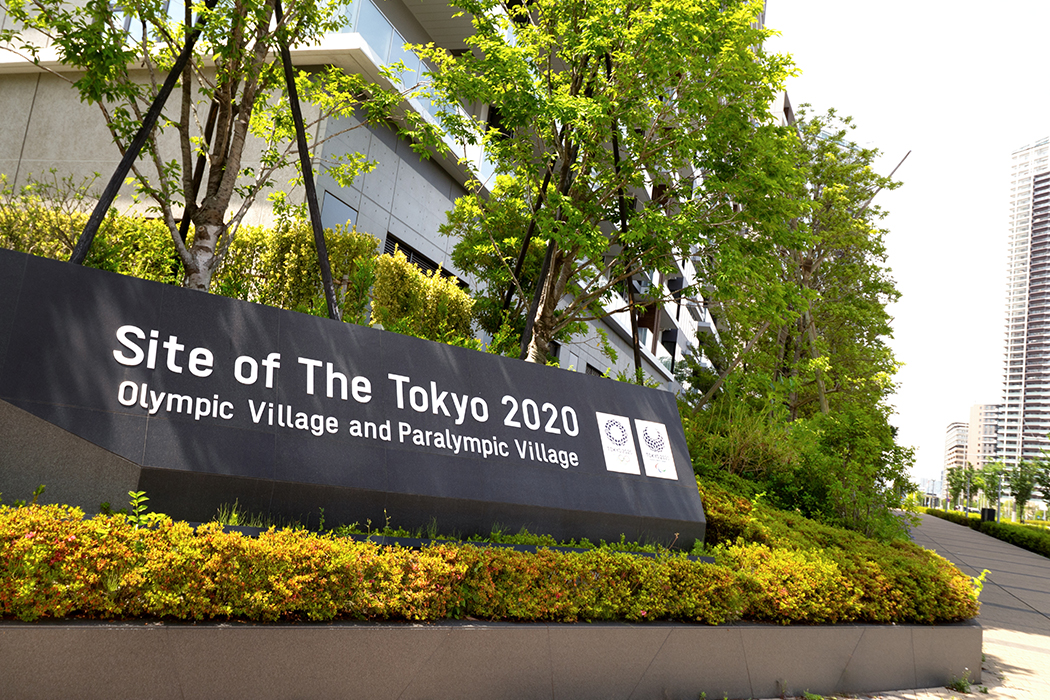
Building on the “spatial turn” in social sciences, this issue positions Olympic-related infrastructure as socio-technical systems that structure social relations, redistribute opportunities, and mediate power between stakeholders. The planning of the Olympic Games is increasingly shifting away from a monocentric model, resulting in networked venues, multi-city clusters, and diversified legacies. These changes raise new questions about:
- The political materiality of event-related infrastructure: who builds, maintains, and benefits from it?
- The rights and adequate capacity of different populations affected by the spatial reorganisation linked to the Games.
- How everyday uses, contestations, or forms of resistance redefine Olympic space after the event.
- How legacies such as Olympic Villages—first created in Los Angeles in 1932 as a form of sport urbanisation—have become self-contained ecosystems for athletes while leaving complex cultural and spatial afterlives for host cities and regions.
Thematic axes
We invite articles addressing, but not limited to, the following thematic axes:
1. Non-state governance of Olympic infrastructure and spatial rights
Although considerable attention has been paid to state actors (host cities, national governments, and the IOC), the governance of Olympic sites is increasingly mediated by private consortia, local associations, and transnational networks. We are looking for contributions that explore:
- How the shift to collective or collaborative citizenship redefines the use and belonging of Olympic space.
- To what extent do non-state actors influence, complement, or undermine public commitments to accessibility, inclusion, and legacy?
- The emergence of new collective or contested claims on Olympic infrastructure after the Games.
2. Representations of citizenship and the Olympic territory
Olympic infrastructure is intrinsically linked to political and cultural representations, ranging from celebrated icons of national pride to targets of criticism and activism. Articles in this section may address:
- Contrasting narratives about who are the “legitimate” users or beneficiaries of Olympic legacy.
- The role of urban and architectural design in shaping (or limiting) access to new recreational and leisure landscapes.
- How technology, urban branding, or participatory initiatives reconfigure notions of inclusion and exclusion in Olympic cities and regions.
3. Citizenship, leisure, and everyday practices in Olympic spaces
One critical strand examines how ordinary people experience the Olympic legacy in their everyday lives, how their leisure practices give meaning to these spaces, and how they constitute new forms of spatial citizenship. Key questions include:
- How do residents, workers, fans, or tourists negotiate changes in transport, housing, and public spaces after the Games?
- In what ways do grassroots initiatives or social movements challenge, appropriate, or reimagine Olympic infrastructure?
- How are issues of spatial justice, sustainability, and leisure accessibility addressed—or precluded—in everyday interactions with Olympic legacies?
Submission guidelines
We welcome empirical and theoretical contributions that draw on diverse disciplines, including urban studies, geography, sociology, planning, anthropology, architecture, and others. Comparative and international perspectives are strongly encouraged.
Submissions may cover (but are not limited to):
- Analysis of governance models and new actor coalitions in multi-cluster Olympic events.
- Case studies of protest, mobilisation, or advocacy concerning access to Olympic facilities.
- Longitudinal studies tracing the evolution of Olympic Village use and its community impacts.
- Critical explorations of branding and symbolic representations attached to Olympic urban development.
- Ethnographic work on the lived experience of residents or users of Olympic spaces post-event.
Article types
- Empirical research papers (6,000–8,000 words)
- Theoretical syntheses (6,000–8,000 words)
- Research notes / methodological reflections (3,000–4,000 words)
- Policy commentaries (2,000–3,000 words)