Jan Andre Lee Ludvigsen
Liverpool John Moores University, UK

The Olympic Games, Sports Law and Human Rights
128 pages, hardcover
Abingdon, Oxon: Routledge 2024 (Routledge Focus on Sport, Culture and Society)
ISBN 978-1-032-94257-5
The relationship between the Olympic Games, sports law and human rights has constituted a dynamic area of scholarly activity in recent years. Most notably, James and Osborn’s book Olympic Laws was published in 2023 (and reviewed by this author for idrottsforum.ord in 2024). Meanwhile, other contributions from Boykoff (2025), Chernykh and colleagues (2025), Khani and Næss (2025), and Grix and James (2024) have all served to confirm the importance of a continued, inter-disciplinary study of the IOC’s lawmaking capabilities, the ever-evolving Olympic legal framework, and this framework’s responsiveness to emerging political trends or social issues. Alexandre Miguel Mestre’s 2024 book, The Olympic Games, Sports Law and Human Rights, adds fresh insights to the current debates and field, by examining the nexus between sports law, the Olympic Movement and human rights.
Of course, as consistent with the Routledge Focus format, the text – written by a practitioner with expertise in sports law – is short but focused. It is divided into seven chapters of varying lengths (e.g., one chapter consists of five pages, although this isn’t a problem!). Through these chapters, Mestre’s analysis covers a lot of ground – going all the way back to the ancient Olympic Games at Olympia, and later the life and vision of the modern Olympics’ founder, Pierre de Coubertin. The engagement with the Olympics’ historical underpinnings aids the book’s aim of exploring the relationship between sports law, human rights and the Olympic movement and, in doing so, tracing the roots, developments and implications of Olympic laws and the Olympic Charter which famously asserts that ‘[t]he practice of sport is a human right’ (IOC, 2025: 8).
Whilst highlighting the importance of not conflating political opinions with political demonstrations, Mestre also reminds us that this, notwithstanding, must not overshadow the fact that athletes, first and foremost, are people and that their status as athletes is secondary to this.
In the opening chapter, the author starts by defining ‘sport’ and its meanings in legal terms. Mestre also traces sports law back to ancient Greece where even the earliest form of the Olympic Games illustrated that ‘there can be no competitions without rules’ (p. 10). Chapter One is certainly interesting and illustrates how even this primitive Olympic version became surrounded by rules and laws about eligibility and participation, and questions about how to preserve sports ethics against the threats of corruption, conflict of interest, doping and even early forms of crowd violence. As the author writes:
The Olympic Games of Antiquity were policed by the alytes (guardians of the sanctuary) or mastigophoroi, who acted under the auspices of the Alitarch, a senior magistrate, whose role was that of Chief, Officer or Comissioner of Police, that is, his role was to ensure public order (p. 22).
The presence of a culture of regulation, it appears, has ‘always’ surrounded sport – and the assemblage of laws, penalties, rules and notions of justice at Olympia, accordingly, may be viewed as the early beginnings of sports law, as Mestre shows.
The following chapters focus on the Olympic Charter (Chapter Two) and the legal nature of the IOC, National Olympic Committees and International Sports Federations (Chapter Three). Here, Mestre articulates his core argument holding that the Olympic Charter – which emphasises the key principles of Olympism and may be regarded as both a ‘constitution’ and a ‘contract’ (p. 48) – is the sports law instrument that is driving the more universal fight for (sports) ethics (Chapter Two). The contested legal nature of the IOC – speaking to its power to define and enforce Olympic laws – is clarified in Chapter Three, with Mestre explaining the IOC’s position as an ‘organisation with an international character’ and as a ‘non-governmental organisation’ (p. 52).
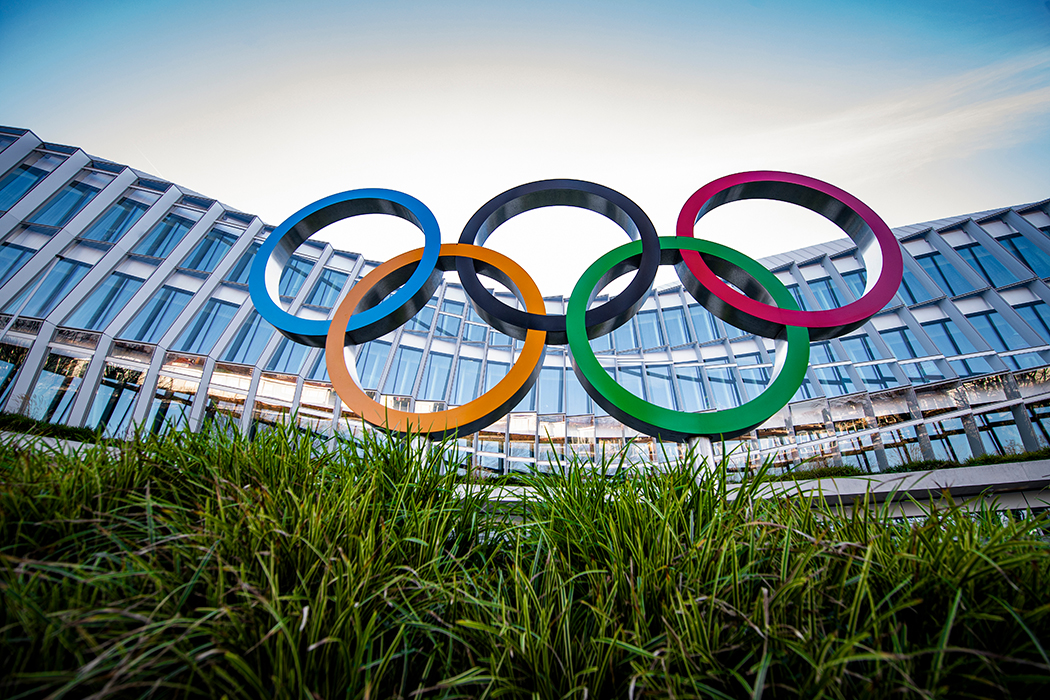
The book’s second part is focused on human rights issues. It explores the legacy of Pierre de Coubertin and his conviction that sport could be a vessel to promote not only the right to sport, but human rights more widely (Chapter Four); the meaning of the right to sport within the Olympic Charter (Chapter Five); and the relationship between religious freedom, sport and law (Chapter Six).
The final chapter (Chapter Seven) addresses the question of athletes’ right to protest or even express political opinions, in light of rules serving to keep politics out of the stadium (e.g., the Olympic Charter’s famous Article 50, which inter alia prohibits political demonstrations at Olympic sites). Whilst highlighting the importance of not conflating political opinions with political demonstrations, Mestre also reminds us that this, notwithstanding, must not overshadow the fact that athletes, first and foremost, are people and that their status as athletes is secondary to this. In recent years, Olympic athletes’ (and spectators’) right to express themselves on political matters has been widely discussed (Boykoff, 2024; Grix and James, 2024; Byrne and Lee Ludvigsen, 2024). In this regard, as Grix and James (2024:75) write, Rule 50 ‘continues to provide the IOC with an incredibly wide discretion to restrict athletes’ freedom of expression’. Hence, the book ends by tying into these on-going debates on the balance between rules, principles of political neutrality and freedom of expression. These debates are, of course, very likely to re-emerge in just a few months, when thousands of athletes and spectators arrive in Milan and Cortina d’Ampezzo for the 2026 Winter Olympics in February 2026.
Accepting that these things are always a matter of personal preference, a brief concluding chapter summarising the book’s key arguments, contributions and some avenues for future work in the area, would have been welcome. In this regard, it would also have been interesting to read a little more about the future of the Olympic Charter as a key instrument: especially given the IOC’s reform discourses (see Boykoff, 2024), the political climate surrounding the next Olympics editions, and since the Charter itself remains subject to revisions and updates.
The Olympic Games, Sports Law and Human Rights is an interesting and timely book. It reflects and adds to the momentum in the field as alluded to above. It will be a helpful resource for students, researchers and practitioners interested in the history of Olympic laws, mega-events, sports ethics and law, and human rights in sport.
Copyright © Jan Andre Lee Ludvigsen 2025
References
Boykoff, J., 2025. The Olympics in crisis: challenges, reforms, and the path forward. The International Sports Law Journal, pp.1-20.
Byrne, S. and Lee Ludvigsen, J.A. (2024) An Olympic embrace? A critical evaluation of the IOC’s commitment to human rights. International Journal of Sport Policy and Politics, 16(2), 217-234.
Chernykh, Y., Krieger, J. and James, M. (2025) Through Challenges and Disruptions: The Evolution of Lex Olympica. The International Sports Law Journal, 1-3.
Grix, J. and James, M. (2024) The politicisation of sport and the principle of political neutrality: A contradiction in terms?. The International Sports Law Journal, 24(1), 68-77.
IOC (2025) Olympic Charter. Lausanne: IOC.
Khani, Z. and Næss, H.E. (2025) Merely plastering a deep cut? A critical policy analysis of the International Olympic Committee’s (IOC) human rights commitment. International Journal of Sport Policy and Politics, pp.1-25.