Aage Radmann, Rector, Norwegian School of Sport Sciences
Anna Sätre, Research Assistant in Sport Sciences,
Malmö University and Norwegian School of Sport Sciences
Mattia Angelini, EU Project Specialist, Football Supporters Europe
Geoff Carroll, EOSE Director of Skills Development
Radosław Kossakowski, Deputy Dean for Research and International Cooperation, Faculty of Social Science, University of Gdańsk
Jean Francois Brocard, Associate Professor in Economics, University of Limoges, France
Stuart Dykes, Director of European & Institutional Affairs. Football Supporters Europe
Tony Ernst, SLO Development Officer, Football Supporters Europe
 The professionalization of roles within football governance has become an increasingly significant topic in recent years, particularly in relation to supporter engagement and dialogue. Among these roles, the Supporter Liaison Officer (SLO) has emerged as a key mechanism for fostering communication between clubs, governing bodies, and fan communities. The SLO function is formally recognized within UEFA licensing regulations, yet its implementation varies considerably across national contexts, reflecting differences in organizational structures, cultural traditions, and regulatory frameworks.
Against this backdrop, the project Towards the Professional Development of Supporter Liaison Officers (TPDS) was initiated by Football Supporters Europe (FSE) with financial support from the European Union. The overarching aim of TPDS is to advance the professional development of SLOs through a structured and evidence-based approach. Specifically, the project pursues two primary objectives:
- to identify and define the occupational standards that constitute the foundation of the SLO role, and
- to design a higher education-level training program that is adaptable to diverse local and national conditions.
The project is implemented through a consortium of academic and organizational partners, reflecting its interdisciplinary and transnational character. European partners include the University of Limoges (France), University of Kassel (Germany), University of Gdansk (Poland), Malmö University (Sweden), and the European Observatoire of Sport & Employment (EOSE, France). In addition, TPDS incorporates a South American dimension through collaboration with the South American Football Confederation (Confederación Sudamericana de Fútbol, CONMEBOL).Together, these partners are jointly developing a strategic roadmap for conceptualizing and operationalizing the SLO role in South America. This collaborative effort reflects the recognition that supporter engagement is a global concern, and that knowledge exchange across continents can enhance the effectiveness and legitimacy of governance practices.
By situating the SLO role within a framework of professional standards and formal education, TPDS represents a significant step toward institutionalizing supporter liaison as a recognized and respected profession. This article examines the rationale, methodology, and anticipated outcomes of the TPDS project, while situating it within the broader discourse on governance, stakeholder participation, and the professionalization of football administration.
Literature Context
The concept of supporter liaison is rooted in broader theories of participatory governance and stakeholder engagementwithin sport. Previous research highlights the tension between commercial imperatives and democratic accountability in football governance (García & Welford, 2015). The introduction of SLOs under UEFA licensing regulations was intended to bridge this gap by institutionalizing dialogue between clubs and fans. However, empirical studies reveal significant variation in the interpretation and implementation of the SLO role across Europe (Ludvigsen 2025).
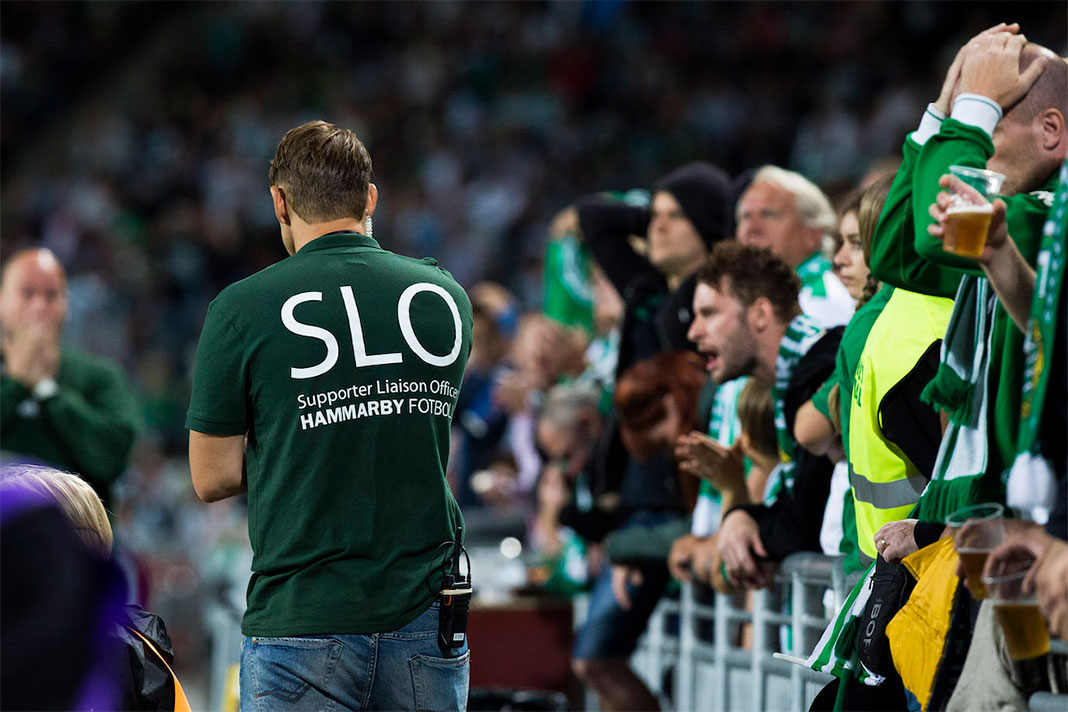
Professionalization theory offers a useful lens for understanding these dynamics. From this perspective, professionalization involves the development of clear occupational standards, structured training pathways, and well‑defined competencies. When applied to football governance, the Occupational Standard for Supporter Liaison Officers (SLOs) highlights the need for a systematic and coherent framework that defines the role’s expectations and required skills. Strengthening the SLO function through standardized competencies and formalized development processes can enhance consistency, legitimacy, and overall effectiveness across clubs and leagues.
Transnational collaboration further complicates this process. While European contexts share certain regulatory and cultural features, South American football governance operates within distinct institutional logics, characterized by different fan cultures, organizational structures, and socio-political conditions (Archetti, 2019). The TPDS project therefore represents an innovative attempt to reconcile these differences through a shared roadmap for professional development.
Methodology
The TPDS project adopts a mixed-methods approach combining qualitative and quantitative techniques to achieve its objectives. The methodology consists of three interrelated phases:
- Occupational Standards Analysis
- A comprehensive review of existing SLO practices across participating countries.
- Semi-structured interviews with SLOs, club officials, and supporter organizations to identify core competencies and role expectations.
- Comparative analysis of regulatory frameworks and governance models.
- Curriculum Development
- Design of a modular training program aligned with higher education standards.
- Integration of theoretical content (e.g., governance, communication, conflict resolution) with practical components (e.g., case studies, internships).
- Validation through expert panels and pilot testing in selected institutions.
- Transnational Roadmap
- Collaborative workshops involving European and South American partners.
- Development of guidelines for adapting the SLO role to South American contexts.
- Drafting of a strategic roadmap for implementation by CONMEBOL and affiliated organizations.
- Occupational Standards Analysis
Data collection and analysis are guided by principles of participatory research, ensuring that SLOs and supporter organizations are actively involved in shaping outcomes. Ethical considerations include confidentiality and cultural sensitivity in cross-continental collaboration.
Expected Outcomes
The TPDS project is expected to deliver several tangible outputs:
- A validated set of occupational standards for the SLO role.
- A higher education-level curriculum for SLO training, adaptable to national contexts.
- A strategic roadmap for implementing the SLO role in South America.
- Enhanced knowledge exchange between European and South American football governance actors.
Beyond these outputs, the project aims to contribute to the professionalization of supporter liaison as a recognized field within sports governance, thereby strengthening democratic accountability and social sustainability in football.
Discussion
The TPDS initiative raises important questions about the nature of professionalization in sport governance. While the establishment of standards and educational pathways can enhance legitimacy, it also risks bureaucratization and exclusion if not accompanied by participatory mechanisms. The involvement of supporter organizations in TPDS is therefore critical to maintaining the democratic ethos underpinning the SLO role.
Moreover, the transnational dimension of TPDS highlights the challenges of policy transfer across diverse cultural and institutional contexts. The roadmap for South America must account for local fan cultures, governance structures, and socio-political realities. This underscores the need for context-sensitive professionalization, rather than a one-size-fits-all model.
Finally, TPDS illustrates the potential of collaborative, EU-funded projects to drive innovation in sports governance. By bridging academic research, practitioner expertise, and stakeholder engagement, such initiatives can generate knowledge that is both theoretically robust and practically relevant.
Conclusion
The TPDS project represents a pioneering effort to institutionalize the SLO role through professional standards and formal education. Its interdisciplinary and transnational approach offers valuable insights into the processes of professionalization and participatory governance in football. Future research should examine the long-term impact of TPDS on supporter engagement, club governance, and the broader legitimacy of football institutions.
References
Archetti, E., P. (2019). Masculinities. Football, Polo and the Tango in Argentina. Routledge. Abingdon. UK.
de Holland, B., B. & Busset, T. (eds.) (2023) Football supporters’ groups in Europe and Latin America: Culture, Violence and Politics in the 21st century, Palgrave/Macmillan. Springer Nature, Cham, Switzerland.
García, B., & Welford, J. (2015). Supporters and football governance, from customers to stakeholders: A literature review and agenda for research. Sport Management Review, 18(4), 517-528.
Ludvigsen, J., A., L. (2025). Insecurities in European Football and Supporter Cultures. Routledge Research in Sport, Culture and Society. Abingdon. UK.
Radmann, A., Andersson, T., Herd, K. “Scandinavian Football Fandom – A Struggle between Loyalty and Commodification”, in Football supporters’ groups in Europe and Latin America: Culture, Violence and Politics in the 21st century, (de Holland, B. B. & Busset, T. eds.) Palgrave/Macmillan. Springer Nature, Cham, Switzerland.