Tag: SSSF
A Critical Analysis of Gender and Body Ideals in Images in Physical Education and Health Textbooks

The body is central in PEH and images of bodies play an important role in shaping students’ understanding of bodily expectations. The aim of this study by Sandra Magnusson and Marie Larneby is to explore how images in PEH textbooks for grades 7 to 9 display gender and body ideals and problematize how norms and ideals are conceptualized, reproduced, and challenged through these images. With support from Connell’s gender theory and Berge’s analytical questions, the images were coded based on body ideals, gender representations, activity, and context. The study reveals a balanced representation of men and women in the images. Despite this apparent equality, stereotypical gender and body norms are made visible.
Från osäkerhet till delaktighet: Simundervisningens betydelse för nyanlända kvinnor och deras barn
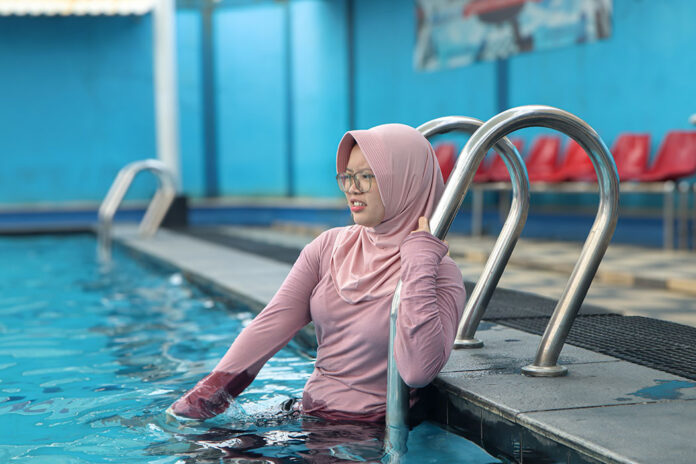
Den här studien av Marie Öhman & Ali Jamshidpey undersöker nyanlända kvinnors erfarenheter av att delta i simundervisning och vilken betydelse deltagandet kan ha för deras eget liv och deras barns möjligheter att utveckla simkunnighet. Studien bygger på en kvalitativ forskningsdesign och intervjuer genomförda före, under och efter en period med simundervisning. Resultaten visar att deltagandet formas av kulturella, religiösa och sociala normer relaterade till kön, kropp och språk. Kvinnorna framträder som aktiva aktörer som förhåller sig till och utmanar dessa begränsningar.
The Institutionalisation of Amateur Esports in Denmark: New Values, New Opportunities, and New Constraints?

Esports is often portrayed as a rapidly expanding cultural field, yet its global development has been marked by an increasing concentration of commercial power. As publishers, media platforms, and tournament organisers consolidate control over competitive infrastructures, the space for non-professional forms of esports appears to narrow. This peer review article by Anna Brus and David Ekholm critically examines the institutionalisation of organised amateur esports within DGI, Denmark’s second largest sport association, through a qualitative case study using documents and interviews.
From Kilometers to Kudos: A Study of Runners’ Online Interaction on Strava

With inspiration from Erving Goffman’s theory, this peer review study by Mathilde Hallgren, Nanna Rønne and Ulrik Wagner investigates how online interaction affects Strava-users’ running experiences and self-presentations. Through semi-structured interviews supplemented by netnographic observations, Strava is analyzed as a performative scene where physical and social ideals are staged and negotiated. The study identifies how Strava’s visual feedback mechanism and interactions from other users both strengthen motivation and create performance pressures.
If you want to fight individual deviance such as corruption and doping in sport: What leadership, governance, and culture might work in sport management?

In this peer review article for Scandinavian Sport Studies Forum, Petter Gottschalk asks the question of what might work best in sport management when the focus is on preventing, detecting, and correcting individual deviance, which is a negative phenomenon in sport as it refers to behaviors that go against and violate expectations, norms, values, as well as rules, regulations, and laws. While ethical and democratic leadership styles are normally recommended, sometimes dictatorial and narcissistic leadership styles are needed to fight deviance.
Sports Spectatorship in the Nordic Countries: The Exceptional Role of Ice Hockey in Finland

In this peer review article, Arto Kuuluvainen examines how sports spectatorship contributes to national identity in the Nordic countries, with a particular focus on the culturally exceptional position of ice hockey in Finland. Using two survey datasets—a comparative Nordic survey from 2022 and Finnish brand-perception data from 2018—the study analyses national pride and satisfaction related to international sporting success, as well as patterns of sports following through media and live attendance. Finland reports the highest levels of sports-related national pride, and ice hockey is the most followed sport in Finland, whereas football dominates in Sweden and Norway.
“I Can Only Participate in Free Sports”: Leisure-Time Physical Activity of Low-Income Working People in Finland

Drawing on a precarization framework, this article by Hanna-Mari Ikonen argues that sport sociologists should more explicitly recognize the growing influence of contemporary working life on individuals’ sport and leisure practices. Leisure is an ideal context for diverse physical activities, which are widely recognized as beneficial for health and wellbeing. However, an increasing number of people hold precarious jobs, such as fixed-term or involuntary part-time contracts, or are permanently employed in very low-paid positions. The article shows that precarious employment profoundly affects people’s lives from emotions to material conditions.
Leadership in Elite Football: A Case Study of Leadership Characteristics in a Men’s Football National Team

This study by Sakari Holopainen, Mihaly Szerovay, Niilo Konttinen and Marja Kokkonen explored the types of leadership characteristics found in a men’s national football team. The research question was: What leadership characteristics describe a men’s national football team? Our data comprised 182 pages of transcripts of interviews with five coaches and two players from a men’s national team. The team’s leadership structure was characterized by the coaching staff and players having clear roles while leaving space for informal leaders to emerge as needed.
Systems thinking and complexity science in sport policy: A scoping review of the research

Systems thinking and complexity science have expanded in recent years within sport policy research, particularly in the examination of physical activity policies. This trend is based on a growing recognition of the complex nature of sport and sport policies, which calls for new theories and methods of analysis. To provide an overall picture of the current state of the research, Tuomas Häkli and colleagues conducted a scoping review guided by the following research question: What type of research has been conducted using systems approach in sport policy?
Open water swimmer Sally Bauer – a star but not a heroine

Within the male-dominated realm of long-distance swimming during the 1930s and 1940s, Sally Bauer’s accomplishments disrupted entrenched stereotypes of women as fragile and passive. She broke barriers and redefined societal perceptions of female athletes and their capabilities. However, despite her extraordinary achievements, Bauer was never fully acknowledged as a national icon or Swedish heroine. Societal biases of the time overshadowed her groundbreaking contributions, denying her the recognition she rightly deserved.